Small kitchens demand smarter choices, not simply smaller equipment. A cutting board must fit your counter, sink, storage space, and cooking habits. The right surface should provide enough room for steady knife work without blocking your only preparation area. It should also resist slipping, clean easily, and remain durable after repeated washing.
When considering how to select cutting boards for small kitchens, food safety must guide the decision. Meredith Carothers, a food safety expert with the United States Department of Agriculture, states, “One cutting board should be used for fresh produce and bread, and a separate one should be used for raw meat, poultry, and seafood.” This advice matters in compact homes, where one board may be used for everything. A color-coded pair can reduce confusion. A slim board can slide beside a refrigerator. A board with a handle may hang inside a cabinet door.
Material also changes the daily experience. Wood feels gentle under a knife and can look beautiful, but it needs careful drying and maintenance. Plastic boards are often lighter and easier to sanitize, although deep knife grooves can become difficult to clean. Bamboo saves space, yet some users find it harder on knife edges. There is no perfect board.
Measure first. Then question your routine. Do you chop vegetables daily, or prepare raw meat occasionally? Many recommendations overlook this difference. A smaller board may be practical, but it can become unsafe when ingredients spill over its edges. The best choice balances hygiene, working space, storage, and honest kitchen limitations.
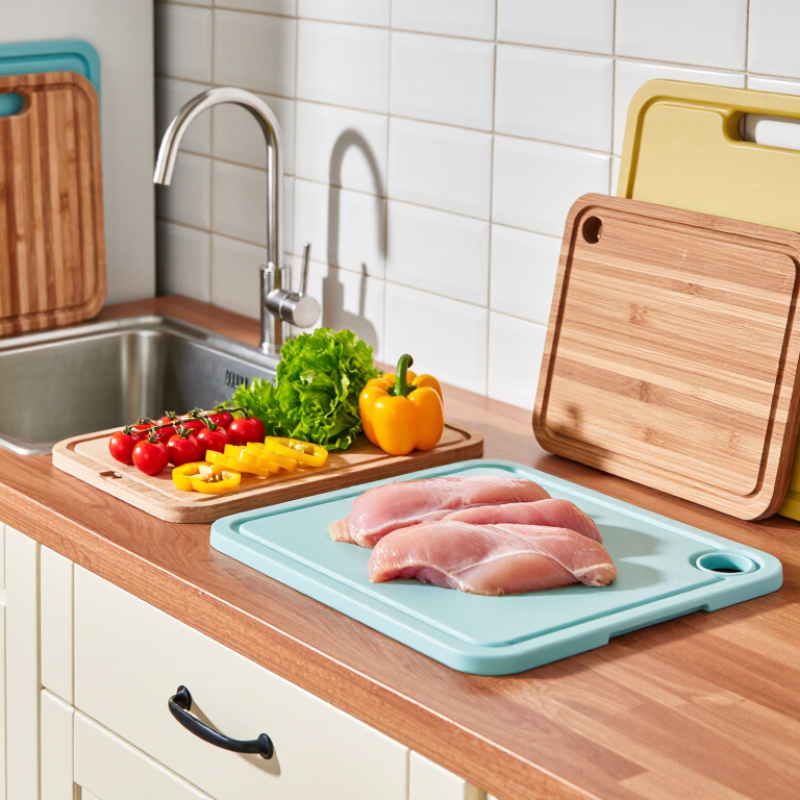
Before choosing a cutting board, measure the kitchen’s real working space. Record the distance between your countertop, sink, and cooktop. A board that fits a showroom may block your only preparation area. In my compact galley kitchen, a 12-by-16-inch board leaves enough room for a bowl beside it. That small clearance matters. Measure storage too. A thick board may perform well but become awkward in a narrow cabinet.
Your cutting needs should guide the material and size. The 2024 Houzz U.S. Kitchen Trends Study reported that 76% of renovating homeowners upgraded their countertops. This suggests that durable preparation surfaces remain a major kitchen priority. However, the countertop itself should not decide your board. For frequent vegetables, choose a stable board with a moderate cutting area. For raw meat, use a separate, clearly identifiable board. The USDA advises separating raw animal foods from ready-to-eat ingredients to reduce cross-contamination risks. A dishwasher-safe option may suit busy households, but check its care instructions carefully.
Think about movement, not just surface area. Rubber feet or a damp towel can prevent sliding during heavy chopping. A juice groove helps with wet foods, though it reduces usable space. I once bought an oversized board for easier slicing. It was difficult to lift and rarely dried properly. That was poor planning. In a small kitchen, the best board is the largest one you can safely store, clean, and use without crowding the workspace.
In a small kitchen, material matters more than appearance. The CDC estimates that foodborne illness causes 48 million illnesses, 128,000 hospitalizations, and 3,000 deaths yearly in the United States. A board should therefore clean easily and dry quickly. The FDA Food Code 2022 describes food-contact surfaces as smooth, durable, and resistant to scratching. Plastic boards meet this need and often fit dishwashers. Wood feels stable and protects knife edges, but it needs careful handwashing and complete drying. Glass looks clean, yet it can quickly dull knives. I would not treat “natural” as automatically safer.
Choose a board that leaves roughly 2 inches of workspace around the food. For most compact counters, a 12-by-18-inch rectangular board offers useful chopping space without blocking the sink. A smaller 10-by-14-inch board suits herbs, fruit, and quick breakfasts. Round boards save visual space, but their curved edges waste usable cutting area. A reversible board can provide a plain side for produce and a grooved side for juicy foods. That groove is helpful, sometimes too helpful; trapped liquid can become difficult to remove.
USDA Food Safety and Inspection Service guidance recommends separate boards for raw meat, poultry, seafood, and ready-to-eat foods. In practice, two thin boards may work better than one oversized board in a narrow kitchen. Look for non-slip feet, moderate thickness, and a surface without deep knife scars. Replace boards when cracks remain after washing. My own preference would change with storage space. A perfect board that stays under a pile of pans is not useful.
How to Select the Best Cutting Boards for Small Kitchens?
In a small kitchen, a cutting board should work as a preparation tool and a storage solution. Measure your available counter space before choosing one. A board that fits beside the sink can reduce unnecessary movement while cooking. I prefer medium boards with a narrow profile because they provide enough room for vegetables without blocking the workspace. A board with a handle or hanging hole can move easily to a wall hook. That small change may free an entire drawer.
Storage details matter more than appearance. Choose a board that can stand upright between appliances or slide into a slim cabinet gap. Non-slip edges can improve safety, especially on smooth countertops. However, thick boards often feel sturdy but consume valuable storage space. I once chose one that looked excellent and rarely used it because lifting it from a crowded cabinet was annoying. That mistake changed my buying habits.
Tips: Measure the board and its storage space together. Leave room for your fingers when removing it. Consider a board with separate sides for produce and raw proteins, and clean it promptly after use. Do not rely on attractive grooves alone; they can collect moisture if the board dries slowly. A simple, washable design may serve a compact kitchen better. Check the weight, too. A board that is difficult to lift will gradually become countertop clutter.
Choose boards that balance useful preparation space with a compact countertop and storage footprint. The comparison below uses common rectangular board dimensions and shows the calculated surface area and typical board thickness.
Practical takeaway: A 12 × 8-inch board uses 36% less countertop area than a 15 × 10-inch board and 56% less than an 18 × 12-inch board. For most small kitchens, the compact or everyday size offers a better balance between usable cutting space and easy storage.
In a small kitchen, a cutting board must earn its storage space. Hygiene comes before appearance. Choose a surface without deep grooves, cracks, or loose fibers. These flaws can trap moisture and food residue. I prefer boards that fit fully inside the sink for easier washing. A smaller board is not automatically safer. Crowded chopping can push raw juices onto nearby vegetables. Keep separate boards for raw meat and ready-to-eat foods when possible. Wash the board with hot, soapy water after each use, then dry it upright. Keep it dry.
Maintenance should match your routine, not an idealized one. Plastic boards are often simple to sanitize and replace when heavily scarred. Wood boards feel stable, but they need prompt drying and occasional food-safe conditioning. Never leave either material submerged overnight. I learned this after a board warped near a warm stovetop. That mistake was preventable. Avoid harsh cleaning habits unless the care instructions permit them. A board requiring complicated maintenance may become neglected. Honest selection includes admitting that weakness.
Durability also affects safety. A sliding board can cause more trouble than a lightly scratched one. Look for a stable base, comfortable thickness, and enough room for controlled knife strokes. Test it on your counter before regular use. If it rocks, replace it. Do not keep cutting on boards with splits or persistent odors. These signs suggest the surface is no longer reliable. In compact kitchens, vertical storage improves airflow and prevents damp contact with cabinets. Measure first.
How to Select the Best Cutting Boards for Small Kitchens
The best cutting board depends on what you cook most often. A home cook preparing vegetables daily may prefer a medium wooden board. It feels stable and is gentler on knife edges. However, wood needs regular washing, drying, and occasional oiling. In a cramped kitchen, that maintenance can become annoying.
If you prepare raw meat frequently, choose a nonporous board that is easy to clean thoroughly. A dishwasher-safe plastic board can be practical, especially when counter space is limited. Keep it separate from boards used for bread or fresh produce. For baking, a thin flexible board may work well because it can slide beside a mixing bowl. I once bought a large board for comfort, but storing it became a daily problem. Bigger was not always better.
Tips: Measure your available storage first. A board should fit inside a cabinet or stand securely against a wall. Look for a surface large enough to keep chopped food away from the knife. Avoid boards with deep cuts, cracks, or persistent odors. Replace them when cleaning no longer feels reliable. Non-slip feet can help, but they also consume storage space. Think about that trade-off. Your cooking habits matter more than appearance.
Plastic cleans easily and often fits in a dishwasher. Wood feels stable and protects knife edges. Glass looks neat but can dull knives quickly. “Natural” does not always mean safer.
A 12-by-18-inch rectangular board offers useful chopping space. Leave about two inches around the food. A 10-by-14-inch board suits herbs, fruit, and quick breakfasts.
Round boards may look compact, but curved edges waste cutting space. Rectangular boards usually provide more usable room. Measure before buying.
A plain side can hold produce. A grooved side can catch juices from wet foods. However, grooves may trap moisture and require careful drying.
Separate boards are recommended for raw meat, poultry, seafood, and ready-to-eat foods. Two thin boards may fit better than one oversized board. Keep raw and cooked foods apart.
Choose a board that stands upright or slides into a narrow cabinet gap. A handle or hanging hole can free drawer space. Leave room for your fingers.
Non-slip feet help on smooth counters. Wash the board promptly after use. Dry it completely before storage. Deep knife scars deserve attention.
Replace it when cracks remain after washing. Deep scars can be difficult to clean. I once favored appearance over storage, and rarely used the board. A beautiful board is useless under stacked pans.
Learning how to select cutting boards for small kitchens starts with assessing your available counter and storage space, as well as the types of food you prepare most often. Consider boards made from materials such as wood, plastic, or composite, comparing their durability, knife friendliness, cleaning requirements, and resistance to moisture. Choose a size and shape that provides enough room for safe food preparation without overcrowding the counter. Compact rectangular boards, reversible designs, and boards with useful edges or handles can improve efficiency and make storage easier.
The best cutting board should also support good hygiene and safe cooking habits. Select a surface that is simple to clean, maintain, and replace when it develops deep grooves or damage. If you regularly prepare vegetables, meat, or baked ingredients, using separate boards or clearly designated surfaces may help reduce cross-contamination. Ultimately, the right choice balances your cooking style, kitchen layout, maintenance preferences, durability expectations, and need for convenient everyday storage.
Eco Best Kitchens