Preparing food becomes easier when your tools fit the way you actually cook. A flexible cutting mat can move from the counter to the bowl, reducing unnecessary lifting and scraping. It may also protect delicate countertops from knife marks and moisture. Understanding why flexible cutting mats are convenient helps shoppers choose with practical expectations, not attractive packaging alone.
This guide examines useful features for everyday food preparation. Consider the mat’s material, thickness, size, surface texture, and cleaning instructions. A thin mat rolls easily, but it may shift under firm chopping. A thicker design can feel steadier, though it may occupy more storage space. Look for clear food-contact information from the manufacturer. Reliable product details should explain whether the mat is dishwasher-safe and suitable for repeated kitchen use.
Small details matter during busy cooking sessions. A textured underside can reduce sliding while onions, herbs, or carrots are being cut. A flexible edge can help funnel chopped ingredients into a saucepan. However, flexibility should not replace stability. No mat solves every problem. It still needs regular washing, thorough drying, and careful inspection for deep grooves or warping. Some claims may sound convincing, but personal testing remains valuable. Place the mat on your counter, cut a firm vegetable, and notice whether it bends, creeps, or holds its position. The best choice is not always the softest or cheapest option. It is the one that supports safe, clean, and comfortable preparation in your kitchen.
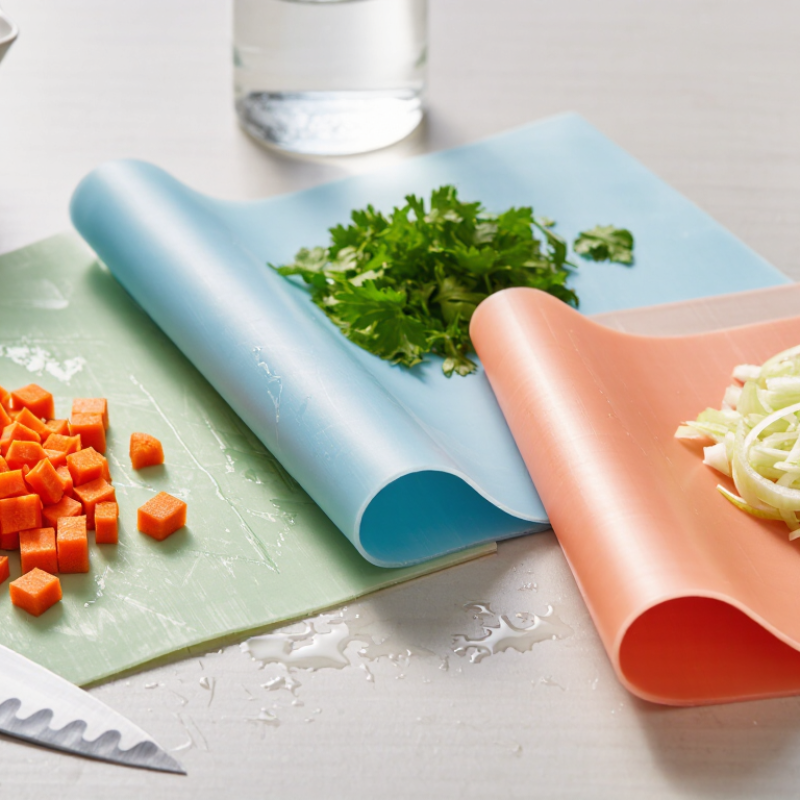
Flexible cutting mats are thin, bendable surfaces for chopping, slicing, and transferring ingredients. Their polymer construction resists moisture and usually cleans more easily than porous wood. When bent, the mat forms a shallow funnel, guiding diced onions or herbs into a pan without spilling. Some mats include a textured underside, which helps reduce sliding on a dry countertop.
The FDA Food Code 2022 recommends food-contact surfaces that are smooth, durable, and easily cleanable. That guidance matters when comparing mat thickness, surface texture, and edge design. A very soft mat may curl during cutting. A very rigid one may not pour neatly. My first mat choice was too thin, and knife marks appeared quickly. I should have checked its stated thickness and intended cutting use.
Food safety also depends on handling, not only material. In a 2018 USDA FSIS observational study, 48% of participants transferred bacteria to spice containers during meal preparation. Use separate mats for raw meat and ready-to-eat foods when possible. Wash the mat with hot, soapy water after cutting raw ingredients, then dry it fully. Check the care instructions before using a dishwasher. Heat resistance is not universal. A mat that bends well may still warp beside a hot pan. Look for a stable grip, clear cleaning guidance, and enough surface area for your largest daily task.
Choosing a flexible cutting mat starts with its material.
Food-grade plastic is lightweight, affordable, and easy to roll into a drawer. Silicone feels softer and usually grips the counter better, but it may collect knife marks faster. Thin mats are convenient for transferring chopped vegetables into a pot. However, very thin sheets can curl during use and create an unstable cutting surface.
Look for a textured underside, clear size markings, and a surface that does not dull knives quickly. A useful mat should bend without cracking after repeated washing. Check whether it tolerates warm water and dishwasher cleaning, if that matters in your kitchen.
Some materials hold onion or garlic odors longer than expected. I have learned that “easy to clean” does not always mean odor-free. A thicker mat may feel safer, though it takes more storage space.
Tips: Test the mat on a dry counter before cutting. If it slides, place a damp towel underneath. Choose separate mats for raw meat and produce when possible. Wash both sides after handling raw ingredients, then dry the mat fully before rolling it. Avoid mats with deep grooves; they can trap food particles and become difficult to inspect. The perfect balance is personal, and my first choice was not always the most practical one.
Choosing a flexible cutting mat starts with your counter space and daily ingredients. A 30 × 40 cm mat suits small kitchens and quick fruit preparation. For larger vegetables, meat, or batch cooking, choose about 40 × 50 cm. The surface should extend beyond the food, but not beyond the counter edge. Extra space helps keep juices contained. It also reduces awkward wrist movements.
Thickness changes both comfort and control. Mats around 1.5–2 mm are light and easy to roll, but they may shift on smooth counters. A 3–5 mm mat feels steadier and offers better protection from knife pressure.
Very thick mats can resist folding and occupy more storage space. This is where personal testing matters. I would not choose thickness by appearance alone. Press one corner, make a few controlled cuts, and check whether the mat curls or slides.
Tips: Select a mat at least 5 cm wider than your largest ingredient. Place a damp towel underneath if the surface moves. USDA FSIS recommends washing cutting surfaces after preparation, especially after contact with raw foods. The CDC estimates that foodborne illnesses affect about 48 million people in the United States each year. A suitable size supports cleaner separation and easier washing, although no mat replaces careful hygiene. Think about storage too. A mat that stays rolled may develop memory and refuse to lie flat.
How to Choose Flexible Cutting Mats for Easy Food Prep?
Matching a cutting mat to the task matters more than choosing the thinnest option. For vegetables, use a firm, nonabsorbent mat with a lightly textured surface. It should resist slipping while you slice carrots, onions, or herbs. Flexible edges help funnel chopped food into a pan without scattering pieces. Keep this mat for produce only. It sounds strict, but separation reduces mistakes.
Raw meat and seafood need a mat that tolerates thorough washing and heat, when permitted by its care instructions. The USDA FSIS recommends separate surfaces for raw animal foods and ready-to-eat ingredients. That guidance addresses cross-contamination risks. The CDC estimates that foodborne illnesses cause about 48 million illnesses and 3,000 deaths annually in the United States. A cutting mat cannot solve every hazard. It can make safer habits easier. Use a clearly different color or storage location for raw proteins.
For bread and pastry, choose a wider, smoother mat with enough grip for rolling dough. A flexible design helps lift pastry without tearing its edges. However, very soft mats may crease under a heavy knife. I have found that attractive thinness can become annoying during repeated chopping. Check for deep grooves, curled corners, and lingering odors after cleaning. The FDA Food Code 2022 emphasizes smooth, durable, and nonabsorbent food-contact surfaces. Replace a mat when cuts remain visibly dirty after washing, even if it still looks usable.
A thinner, more flexible mat is convenient for herbs and soft produce, while thicker mats provide better stability for firm vegetables, meat, and heavier knife work. The recommendations below use practical thickness ranges commonly found in household cutting mats.
For everyday food preparation, choose a flexible mat around 0.5–1.5 mm for easy lifting and transferring. For meat or repeated chopping, a 2–3 mm mat offers greater stability. Avoid using flexible mats for cleaver work or cutting through bones; use a purpose-built rigid board instead.
Flexible cutting mats make food preparation easier when they stay stable and clean. Place the mat on a dry, level counter before cutting. A slightly damp towel underneath can reduce movement. Keep separate mats for raw meat, seafood, and ready-to-eat foods when possible. This simple habit helps limit cross-contamination.
Wash the mat soon after use with hot water and dish soap. Scrub both sides, especially the textured edges where food particles may hide. If the material allows sanitizing, use a food-contact surface sanitizer according to its label. Never mix cleaning chemicals. Rinse thoroughly and let the mat air-dry completely. Keep it simple. A rushed rinse is not enough.
Check the mat regularly for deep cuts, rough patches, strong odors, or curling corners. Damaged surfaces are harder to clean safely. I once stored a mat while it was still damp, and it developed an unpleasant smell; drying deserves more attention than I gave it. Store the mat flat when possible, or roll it loosely without sharp folds. Avoid placing heavy cookware on top, because permanent bends can make cutting unstable. Follow the manufacturer’s care instructions, especially before using a dishwasher or strong sanitizer.
Food-grade plastic is lightweight, affordable, and easy to roll away. Silicone feels softer and grips counters better. However, silicone may show knife marks sooner.
A 30 × 40 cm mat works well for fruit and small daily tasks. It leaves enough room without overwhelming the counter.
Choose about 40 × 50 cm for large vegetables, meat, or batch cooking. Extra space helps contain juices and reduces awkward wrist movements.
Mats around 1.5–2 mm are light and easy to store. They may slide or curl. A 3–5 mm mat usually feels steadier.
Test it on a dry counter first. If it moves, place a damp towel underneath. That small step can improve control.
Choose a textured underside, clear size markings, and a knife-friendly surface. Avoid deep grooves. Food particles can hide inside them.
Wash both sides after handling raw ingredients. Use warm water or dishwasher cleaning when suitable. Dry the mat fully before rolling it.
Yes. Onion and garlic smells may remain longer than expected. Easy cleaning does not always mean odor-free results.
Separate mats for raw meat and produce are useful when possible. They support cleaner food separation. Hygiene still depends on careful washing.
Not necessarily. Thicker mats feel safer but need more storage space. My first choice was not always the most practical. Test the mat yourself.
Flexible cutting mats are thin, lightweight surfaces designed to make food preparation easier and more adaptable. Their bendable construction allows you to guide chopped ingredients directly into a bowl, pan, or storage container while saving valuable counter space. When considering why flexible cutting mats are convenient, their easy handling, portability, and simple cleanup are key advantages. Material quality also matters: a food-safe, odor-resistant, nonporous surface can help support hygienic preparation, while a textured or nonslip backing may improve stability.
Choose the mat’s size and thickness according to your kitchen space and typical tasks. A larger, sturdier mat is useful for cutting vegetables or preparing dough, while a thinner option works well for quick chopping and travel. Match the surface to the food being prepared, and avoid using one mat for raw proteins and ready-to-eat foods unless it can be thoroughly sanitized. After use, wash it with warm water and mild detergent, inspect it for deep cuts or warping, dry it completely, and store it flat or loosely rolled to preserve its shape.

Eco Best Kitchens