A beginner’s first knife set should make everyday cooking easier, not fill a drawer with tools that rarely leave the block. The right choice depends on what you cook, how much counter space you have, and whether the knives feel comfortable in your hand. A heavy chef’s knife may feel reassuring in a store, yet tiring when you chop a bowl of onions. Small details matter. Can you grip the handle securely? Does the set include a paring knife and a useful chef’s knife, or several near-duplicates? “More pieces” is not always more value.
Knife writer Chad Ward, author of An Edge in the Kitchen, offers a useful principle, paraphrased here: choose knives for their performance and fit, not for the size of the set. That perspective can guide anyone researching how to select knife sets for beginners. Check the blade material, handle construction, sharpening options, and care instructions before buying. Stainless steel often asks less upkeep, while other steels may need more careful drying. Read the warranty, too. A shiny block can conceal trade-offs. It is also easy to overvalue appearance; I would reconsider that instinct before paying extra for a matching set. This guide compares practical features, explains common knife types, and points out where beginners can save without sacrificing everyday usefulness. Start with fewer, better-chosen knives. A little honest uncertainty is useful: the “best” set still depends on your kitchen and habits.
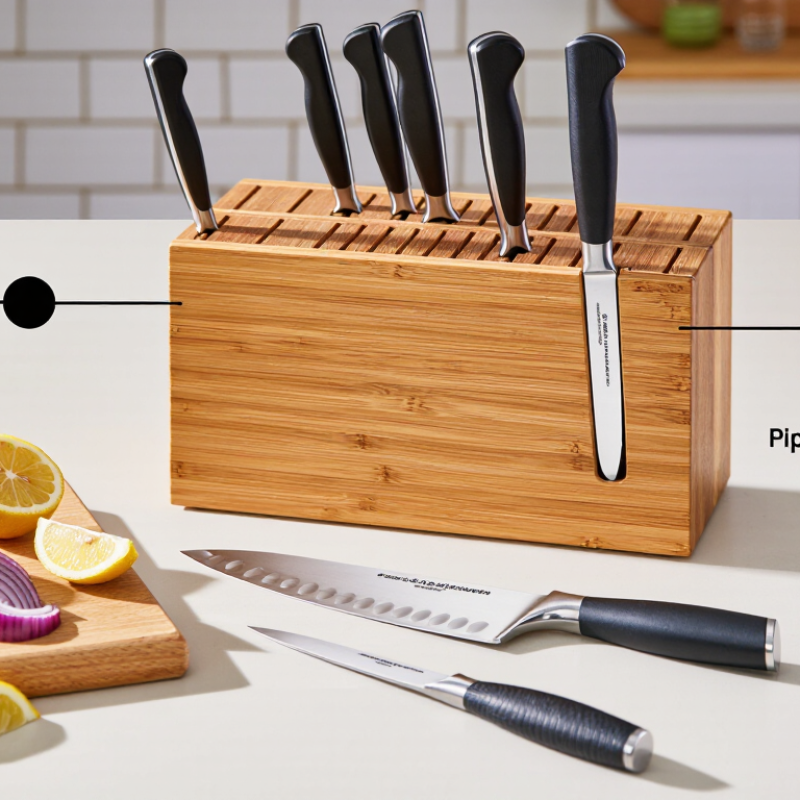
Before comparing knife sets, think about the meals you actually cook. Do you chop onions and carrots most nights, slice crusty bread on weekends, or peel fruit for snacks? Those habits matter more than a large piece count. A chef’s knife handles many chopping and slicing tasks, while a small paring knife helps with peeling and trimming. If you often cut bread, a serrated knife can prevent squashed slices. That matters.
Choose a set that covers your routine without filling a drawer with tools you rarely use. Try holding each knife, if possible: the handle should feel secure, and the weight should let you guide the blade without straining. There is no perfect weight for everyone. A knife that feels reassuringly solid at first might tire your wrist during a long session. Check how the set can be stored and whether its knives are straightforward to sharpen. I would not treat a matching block as essential; a safe, dry storage spot may suit your kitchen better. Keep it simple. A few comfortable knives you maintain are more useful than extras chosen just to make the set look complete.
For a beginner, an 8-inch chef’s knife and a 3.5-inch paring knife cover many everyday tasks without crowding the drawer. The chef’s knife handles onions, carrots, herbs, and boneless meat. Its longer blade gives room for a steady rocking motion, but it may feel large in a smaller hand. Try holding it before buying, if possible.
The paring knife is for close work: peeling an apple, trimming a strawberry, or removing a small blemish from a potato. Its short blade offers control near the fingertips. It is not a small chef’s knife, though; avoid using it to split hard squash or cut through bones. That mismatch can strain the blade and your wrist.
A useful test is to prepare one meal with both knives. Notice whether the chef’s knife feels balanced, and whether the paring knife sits securely in your grip. Keep the board stable with a damp towel underneath, and use a sharp blade rather than pressing harder with a dull one. Small details matter. I once chose a set by counting pieces, which was not especially helpful. Two comfortable knives may serve better than a crowded block, though personal tasks and hand size can change the choice.
When choosing a first knife set, look beyond the number of pieces and check blade hardness. A rating of 58 HRC means the steel measures 58 on the Rockwell C scale. That matters. At this level, a blade can hold a useful edge through routine chopping, slicing onions, and trimming vegetables. It is a practical middle ground, not a promise that the knife will stay sharp forever. Steel type, heat treatment, and blade shape also affect performance.
For beginners, 58 HRC may be easier to maintain than very hard steel, though it still needs regular honing and occasional sharpening. Use a wooden or plastic cutting board, and avoid twisting the edge through hard squash or frozen food. Small details count. A comfortable handle and secure grip may matter more than extra pieces in a large set. Check that you can sharpen the knives with tools you can use safely. A hardness figure looks reassuring, but it leaves out comfort and balance—a detail that is easy to overlook when comparing specifications.
Typical hardness ranges for common kitchen-knife categories, measured on the Rockwell C scale (HRC).
These ranges are general guidance, not fixed standards; steel type and heat treatment affect the result. Higher hardness can help an edge stay sharp, while a less-hard blade may be more forgiving. Consider comfort, maintenance, and intended use alongside HRC.
When choosing a beginner knife set, look beyond the number of pieces. Edge geometry affects how a blade cuts and how carefully it needs to be maintained. A 16-degree edge on each side creates a narrow, keen cutting angle. It can slice ripe tomatoes or herbs with little pressure. The trade-off is that a thinner edge may be less forgiving against bones, frozen food, or twisting motions. That detail is easy to overlook.
For everyday cooking, match the edge to your habits. Use a cutting board, guide the blade straight through food, and avoid scraping chopped ingredients with the sharp edge. A honing rod can help realign an edge between sharpenings, but it does not remove much metal or replace proper sharpening. Check the maker’s care guidance, since sharpening methods vary. I used to focus too much on sharpness alone; durability matters, too.
Tips: Keep the knife dry after washing, and store it where the edge cannot knock against other utensils. Try a controlled cut through a firm carrot or a soft tomato before deciding whether the angle feels right. Small details matter. A precise edge rewards careful technique, but beginners may need time to build that habit.
A beginner’s knife set is valuable when its pieces cover real kitchen tasks, not when the block looks full. In most homes, a chef’s knife handles vegetables, herbs, and boneless meat. A paring knife helps with apples, garlic, and small trimming jobs. A serrated knife is useful for crusty bread and ripe tomatoes.
That trio often covers more than a seven-piece set with several similar blades. Less can work.
Before buying, check what each knife adds and whether you will use it weekly. A utility knife may bridge a gap, but it can also duplicate a smaller chef’s knife. Extra steak knives or specialty blades may sit untouched in a drawer.
Compare steel quality, grip comfort, balance, and whether the knives can be sharpened locally. A heavy block is not proof of better value.
It is tempting to assume more pieces mean fewer future purchases, but that assumption deserves a second look. Choose a set that leaves room to add one tool later, after your cooking habits become clearer.
An 8-inch chef’s knife handles onions, carrots, herbs, and boneless meat. A paring knife helps peel apples and trim strawberries. That pair covers a lot.
Not necessarily. A few comfortable knives may serve better than a crowded block. Extra blades can sit unused.
Use it for crusty bread or ripe tomatoes. Its teeth can slice without squashing soft interiors.
An 8-inch blade suits many tasks, but it may feel large in a smaller hand. Hold it before buying, if possible.
Use it for close work, such as peeling fruit or removing a potato blemish. It is not a tiny chef’s knife.
Check each knife’s purpose, grip, balance, and sharpening options. A heavy block alone proves little. Less can work.
Comfort and useful coverage matter more. I once chose by piece count; it was not a helpful test. Worth reconsidering.
Put a damp towel under the cutting board to keep it steady. Use a sharp blade instead of pressing harder. Keep knives dry.
Choosing a beginner knife set starts with the meals you prepare most often. Think about whether you regularly chop vegetables, slice meat, or peel fruit, then select knives that suit those tasks. An 8-inch chef’s knife is a versatile option for everyday prep, while a 3.5-inch paring knife offers control for smaller jobs. Considering blade size and comfort can help you avoid paying for pieces you are unlikely to use.
When learning how to select knife sets for beginners, compare practical details as well as the number of knives. Hardness around 58 HRC can be a useful point of reference, while an edge angle of 16 degrees per side may indicate a finely sharpened blade. These specifications should be weighed alongside ease of maintenance and handling. In general, a compact set of dependable essentials offers better value than a larger collection with redundant knives.

Eco Best Kitchens