Choosing the right material for cutting boards is essential for both safety and hygiene. Industry expert Dr. Emily Johnson, a food safety specialist, states, "The safest materials for cutting boards can significantly reduce the risk of cross-contamination." This brings us to the pressing question: what is the safest material for cutting boards?
Various materials are available, including wood, plastic, and bamboo. Each has its pros and cons. For instance, wood is often praised for its natural antimicrobial properties. However, it requires careful cleaning and maintenance. On the other hand, plastic is easier to sanitize but may develop grooves over time, potentially harboring bacteria. Reflecting on these choices can be challenging.
Ultimately, the decision hinges on personal preference and kitchen habits. While some swear by traditional wooden boards, others prefer the simplicity of plastic ones. The search for what is the safest material for cutting boards is not as straightforward as it may seem. It's a balance of safety, practicality, and care. Consider your cooking routine and cleaning practices before making your choice.
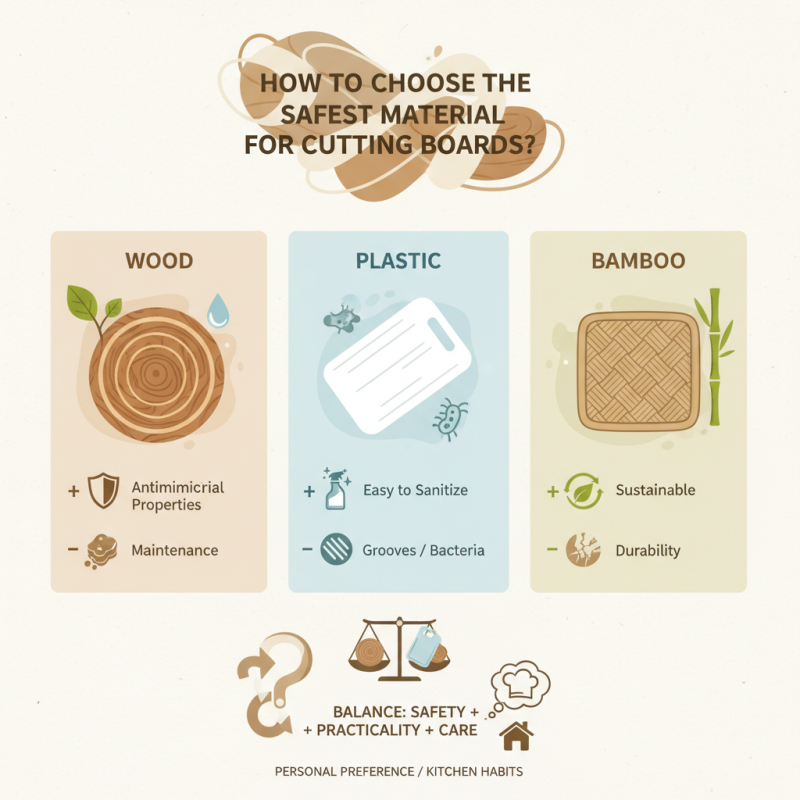
When choosing a cutting board, the material is crucial for safety and hygiene. Commonly used materials include wood, plastic, bamboo, and glass. Each has its unique properties affecting the safety of food preparation.
Wooden cutting boards are popular for their durability and knife-friendly surface. Hardwoods, like maple, resist deep cuts and are less likely to harbor bacteria. However, they require regular oiling and cleaning to maintain their condition. Bamboo is an eco-friendly choice. It's harder than many woods, making it resistant to knife marks. Yet, being too hard can dull knives more quickly.
Plastic cutting boards are lightweight and easy to clean. They can be placed in a dishwasher for thorough sanitation. However, over time, they may develop grooves that harbor bacteria. Glass boards are non-porous and scratch-resistant but can be harsh on knives.
Tips: Always choose a board that suits your cooking style. For meat, a plastic board may be best due to its easy sanitization. Regularly inspect your boards for wear and replace them if they show excessive damage. This step ensures your kitchen remains a safe space for food preparation.
When it comes to cutting boards, safety is paramount. Various materials offer different levels of safety based on their properties. Wood, plastic, and bamboo are popular options, each with unique safety standards. A study by the USDA highlights that wooden boards are less prone to harboring bacteria compared to plastic ones. This is due to the natural antimicrobial properties of wood.
In contrast, plastic cutting boards can be more porous. They may develop deep scratches over time. These scratches can trap bacteria, posing health risks. Research indicates that about 33% of all reported foodborne illnesses in the U.S. are linked to contaminated surfaces. Choosing the right material requires assessment of these factors.
Bamboo boards are gaining popularity as an eco-friendly alternative. However, they can sometimes be harder on knives and may crack easily. A report from the National Sanitation Foundation points out that while bamboo has decent antimicrobial properties, they need regular maintenance to ensure safety. Evaluating cutting board materials involves weighing these concerns carefully to ensure a balance between usability and hygiene.
| Material Type | Safety Rating | Durability | Maintenance | Pro-Cross Contamination |
|---|---|---|---|---|
| Wood | High | Medium | Requires Oil Treatment | Low |
| Plastic | Medium | High | Easy to Clean | Medium |
| Bamboo | High | Medium | Requires Occasional Oil | Low |
| Glass | High | Very High | Easy to Clean | High |
| Composite | Medium | High | Moderately Easy | Medium |
When selecting a cutting board, material choice is crucial for food safety. Recent studies reveal significant differences in bacterial resistance among common materials. For instance, a report from Food Control indicates that wooden cutting boards can harbor fewer bacteria than plastic boards. This is surprising, as people often assume plastic is more hygienic.
Bamboo cutting boards are gaining popularity for their sustainability. However, their bacterial resistance can vary. A study from the Journal of Food Protection suggests that bamboo surfaces can have a similar bacterial retention rate to plastic. This raises questions about their efficacy in preventing cross-contamination.
The choice of material also influences maintenance. Wood requires proper oiling to remain effective, while plastic can be dishwasher-safe. The latter option, however, may develop grooves that trap bacteria. Evaluating bacterial resistance and ease of upkeep can help make informed decisions. Food safety should never be compromised; therefore, thorough research on materials is essential.
This chart compares the bacterial resistance of various cutting board materials based on a study analyzing the average number of bacteria surviving after 24 hours on each material.
When selecting a cutting board, durability and maintenance are crucial. Materials like wood, plastic, and bamboo each have unique characteristics. A study by the USDA found that wooden cutting boards can have natural antibacterial properties, making them a popular choice among chefs. However, they also require more maintenance. Regular oiling is needed to keep the surface hydrated and prevent cracking. Neglecting this can lead to a shorter lifespan.
Plastic boards, while easy to clean and dishwasher-safe, may show wear more quickly. According to research from the University of California, scratched surfaces can harbor bacteria, posing a food safety risk. It's recommended to replace plastic boards once they become heavily scratched. Bamboo is another option, known for its environmental benefits and durability. Yet, it is also prone to splitting without proper care.
Ultimately, the best choice depends on your cooking habits and willingness to maintain the board. Think about how often you cook and your cleaning preferences. Each material requires commitment in its way. Balancing performance with maintenance needs is key to finding the right cutting board for your kitchen.
When selecting cutting board materials, environmental impact is a crucial factor. Different materials embody various ecological footprints. For example,
bamboo cutting boards are popular for their rapid growth and renewability. However, this allure comes with concerns about the sustainable practices
used in harvesting. Responsible sourcing is essential to minimize deforestation and ensure ecological balance.
Plastic cutting boards, while durable and easy to clean, have significant environmental drawbacks. According to a report from the
Environmental Protection Agency, the production of conventional plastics emits harmful toxins. Additionally, they contribute to long-lasting plastic waste in landfills and oceans.
Even if they are recyclable, many end up polluting natural habitats. This calls into question the real cost of convenience.
Wood, especially from sustainably managed forests, presents another option. Studies show that bamboo and hardwoods like maple can have lower
overall carbon footprints. However, the impact of plantation management and transport should not be ignored. Each choice comes with trade-offs that require consideration of
both immediate and long-term effects on our planet.
: Wood, plastic, and bamboo are popular choices. Wood has natural antimicrobial properties, making it safer.
Plastic can develop deep scratches, trapping bacteria. Studies show these surfaces may lead to foodborne illnesses.
Bamboo is eco-friendly and durable but may crack. It also requires regular maintenance to ensure safety.
Wooden boards need regular oiling to stay hydrated and avoid cracking. Neglecting this can shorten their lifespan.
Once heavily scratched, plastic boards should be replaced to prevent bacteria buildup and ensure safety.
They can split without proper care and may be harder on knives compared to other materials.
Your cooking frequency and cleaning preferences will dictate which material balances performance and maintenance best.
No single material is perfect. Each has pros and cons that require careful consideration based on individual needs.
No, wood, plastic, and bamboo each have different durability levels and maintenance requirements that affect their lifespan.
Consider the material's safety, maintenance needs, durability, and how often you use the board for cooking.
When considering what is the safest material for cutting boards, it's essential to evaluate the various types of materials commonly used, including wood, plastic, bamboo, and glass. Each material comes with its own set of safety standards that determine how well they resist bacteria and other pathogens. Recent studies have compared the bacterial resistance among these materials, highlighting wood's natural antimicrobial properties compared to plastic and other options.
Additionally, the durability and maintenance requirements of cutting board materials play a crucial role in their safety. Materials that require less frequent replacement and are easier to clean can minimize health risks. Lastly, considering the environmental impact of different material choices adds another layer to the decision-making process, ensuring that not only are we focusing on safety but also on sustainability. In summary, understanding these factors can guide consumers in choosing the safest material for their cutting boards.

Eco Best Kitchens