When choosing a cutting board, you may wonder, "what are the benefits of wooden vs plastic cutting boards?" The decision can significantly impact your cooking experience and food safety. According to a report by the Food Safety Authorities, wooden cutting boards are less likely to harbor bacteria compared to their plastic counterparts. Dr. Mark Stevens, a culinary expert, emphasizes the importance of selecting the right board by stating, "Each material brings its own set of pros and cons to the kitchen."
Wooden boards are known for their durability and aesthetic appeal. They can withstand years of use with proper care. On the other hand, plastic boards are often dishwasher safe and easier to sanitize. However, they may develop deep grooves over time that trap bacteria. Notably, the choice also reflects on your cooking style. Some chefs prefer the feel of wood, while others prioritize convenience.
Understanding these differences can lead to a more informed choice. Assess your cooking habits and how you maintain kitchen tools. Remember that there's no one-size-fits-all answer. Each material has unique attributes that may suit different needs. Embrace the advantages and disadvantages of both types to enhance your culinary skills.
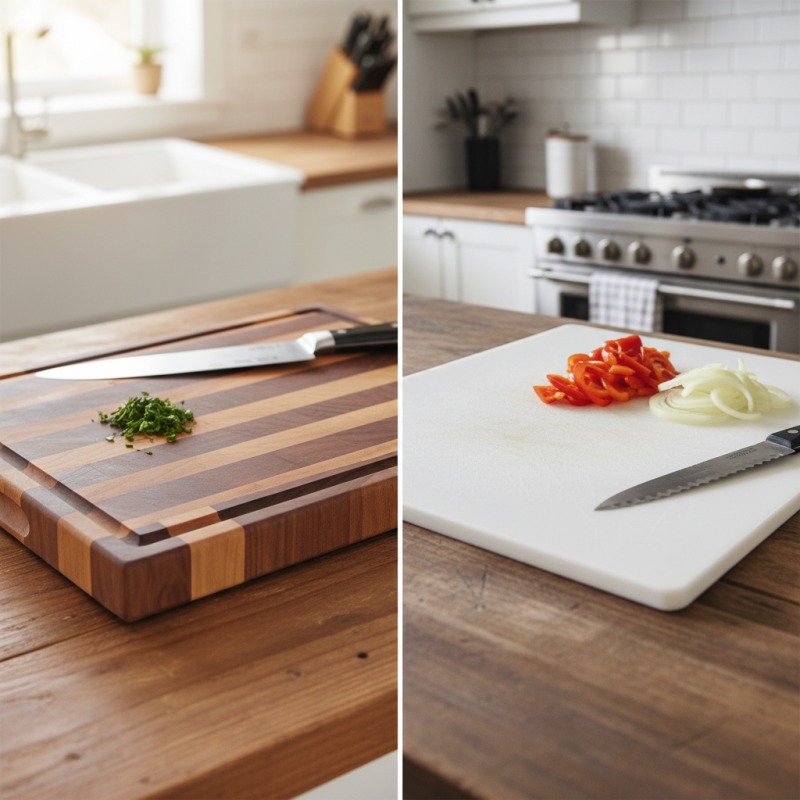
Factors to Consider When Choosing Cutting Board Material
When choosing between wooden and plastic cutting boards, several factors come into play. The material greatly influences hygiene, durability, and knife preservation. According to the USDA, wooden boards can be safer, as their porous structure can trap bacteria, preventing it from spreading. Some studies indicate that wood can have natural antibacterial properties due to compounds in the fibers.
Plastic cutting boards, however, are often regarded for their ease of cleaning and lower maintenance. They are usually dishwasher-safe and come in various colors, which helps in preventing cross-contamination. A study from the Journal of Food Protection notes that plastic boards may score more easily, creating grooves where bacteria can hide. This makes choosing the right plastic board crucial to ensuring food safety.
User preferences also play a significant role. Some chefs prefer the aesthetic appeal and comfort of wooden boards. Others prioritize the practicality and low cost of plastic options. Ultimately, understanding how each material affects food quality and safety is vital. Balancing personal habits and material properties can lead to a more informed decision. Each type has its pros and cons, inviting reflection on what best suits your culinary lifestyle.
Comparison of Wooden and Plastic Cutting Boards
When choosing between wooden and plastic cutting boards, consider durability and maintenance needs.
Wooden boards, often made from hardwoods like maple or walnut, are less likely to dull knives. A survey from the American Knife and Tool Institute states that 50% of chefs prefer wood for this reason. However, wooden boards require more care, including oiling to prevent cracking.
Plastic boards, typically made from polyethylene, are easier to clean. They can be sanitized in a dishwasher, making them a popular choice for home cooks. Studies show that plastic boards harbor fewer bacteria when properly cleaned. Yet, over time, they may develop deep grooves that trap food particles. This can lead to contamination. Regular inspections are essential to ensure their safety.
Both materials have their pros and cons. Wooden boards may be more forgiving on knife edges but can absorb moisture. Plastic boards are lighter and easier to handle but may not provide the same aesthetic appeal. In the end, the choice depends on your culinary habits and maintenance preferences.
Advantages of Wooden Cutting Boards
Wooden cutting boards have long been cherished in kitchens around the world. Their natural beauty adds warmth to any culinary space. They also offer unique benefits that can enhance your cooking experience. One major advantage is their durability. A well-maintained wooden board can last for years, even decades. With proper care, they resist warping and cracking. This longevity often makes them a worthwhile investment.
Another appealing feature is their knife-friendly surface. Wooden boards are gentler on knives compared to plastic. They help maintain the sharpness of your blades, reducing the need for frequent sharpening. Additionally, wooden boards possess natural antibacterial properties. Studies have shown that bacteria cannot thrive on wood as they do on plastic. This may offer a more hygienic option for food preparation.
It's important to acknowledge some drawbacks of wooden cutting boards. They require more maintenance, needing regular oiling to stay in good condition. In contrast, plastic boards can be easier to clean and more convenient for some tasks. Users may need to consider how often they cook and their commitment to care for their boards. Ultimately, the choice between wood and plastic should reflect individual habits and preferences.
How to Choose Between Wooden and Plastic Cutting Boards? - Advantages of Wooden Cutting Boards
| Criteria |
Wooden Cutting Boards |
Plastic Cutting Boards |
| Durability |
Can last for years with proper care |
May warp or dull over time |
| Maintenance |
Requires oiling and careful cleaning |
Dishwasher safe, easy to clean |
| Hygiene |
Contains natural antimicrobial properties |
Can harbor bacteria in deep grooves |
| Aesthetic Appeal |
Beautiful wood grain, adds warmth to kitchen |
Less visually appealing, utilitarian look |
| Cost |
Generally higher initial investment |
More budget-friendly options available |
Advantages of Plastic Cutting Boards
When considering cutting boards, plastic options offer several distinct advantages.
One of the key benefits is their ease of cleaning. Many plastic cutting boards are
dishwasher safe. This feature allows for thorough cleaning, reducing the risk of
cross-contamination. You can cut raw meat, and then simply toss it in the dishwasher. This
convenience often appeals to busy individuals.
Another noteworthy aspect of plastic cutting boards is their durability.
Unlike wooden boards, they don't absorb moisture as much. This creates a more sanitary surface over time. They are also
less prone to warping or cracking. However, over time, plastic boards can develop grooves and cuts that harbor bacteria.
Regularly inspecting and replacing them is essential for safety.
Plastic cutting boards are also lightweight and easy to handle. Their
versatility makes them a popular choice for many cooks. However, they can dull knives faster than wood. This might lead to
frustration if not addressed. While they have their downsides, their practicality cannot
be overlooked.
Maintenance and Care Tips for Cutting Boards
When selecting the right cutting board, maintenance is crucial for longevity. A well-cared wooden board can last for a decade or more, whereas plastic boards usually need replacement every few years. According to a report from the USDA, wooden boards not only resist bacteria but also self-heal when properly maintained.
To keep your wooden cutting board in top condition, oil it regularly with food-safe mineral oil. This increases its lifespan and prevents cracking. Clean it with mild soap and hot water after each use. Avoid soaking it or placing it in the dishwasher. The plastic board is easier to clean but may develop grooves over time, harboring bacteria.
Plastic boards can be washed in a dishwasher, but even then, some studies suggest they may not last as long as wood. If you choose plastic, inspect it frequently for deep cuts and replace it when necessary. Ensuring hygiene is vital; sanitize your cutting boards regularly to prevent foodborne illnesses.
Remember, the right cutting board requires attention. Regular maintenance is essential, impacting both performance and safety in your kitchen. While this may seem trivial, neglecting care can lead to more significant issues down the line.
Comparison of Wooden and Plastic Cutting Boards
FAQS
: Look at durability and maintenance needs first. Choose based on your cooking habits.
Wooden boards do less damage to knife edges. They can keep knives sharper longer.
Regularly oil it to prevent cracking. Avoid soaking it in water.
Plastic boards are easier to clean. They can be sanitized in a dishwasher.
Yes, if not cleaned properly, they can develop grooves that trap food particles and bacteria.
With proper care, they can last for years or even decades.
Yes, they have natural antibacterial properties that can offer a safer food prep option.
They can develop deep grooves over time, trapping potential contaminants.
They require more maintenance compared to plastic boards. Consider your commitment to care.
Reflect on your cooking habits. Consider how much maintenance you’re willing to do.
Conclusion
When choosing between wooden and plastic cutting boards, several factors come into play, including durability, hygiene, and maintenance. Each material offers unique benefits that cater to different kitchen needs. Wooden cutting boards are often praised for their aesthetic appeal, knife-friendliness, and natural antibacterial properties, making them a favorite among many chefs. On the other hand, plastic cutting boards are lightweight, easier to clean, and less susceptible to warping, which can make them more practical for everyday use.
So, what are the benefits of wooden vs plastic cutting boards? Wooden boards provide a warm, traditional feel and are less likely to dull knives, while plastic boards can be sanitized in the dishwasher and are available in a variety of colors. Ultimately, the choice depends on individual preferences for style, usage, and maintenance, highlighting the importance of understanding the advantages of each material. Proper care tips for both types, such as regular oiling for wood and thorough washing for plastic, can also extend their lifespan in the kitchen.

 Eco Best Kitchens