When choosing kitchen knives, many home cooks wonder what are the differences between chef knives and santoku knives. Both knives offer unique advantages, making them essential in any culinary toolkit. Chef knives are versatile, with a curved blade that allows for rocking motions. This design makes them ideal for chopping, mincing, and slicing various ingredients.
On the other hand, santoku knives come with a flat blade and a slightly shorter length. They excel at precision tasks, such as dicing vegetables or processing meat. The hollows along the blade help prevent food from sticking. Despite their differences, both knives can be used for similar tasks, which can create confusion for new cooks.
Understanding their distinctions is crucial. The choice often depends on personal preferences and cooking styles. Reflecting on your habits in the kitchen can lead to better decisions when selecting the right knife for your needs. After all, the right tool can greatly enhance your cooking experience.
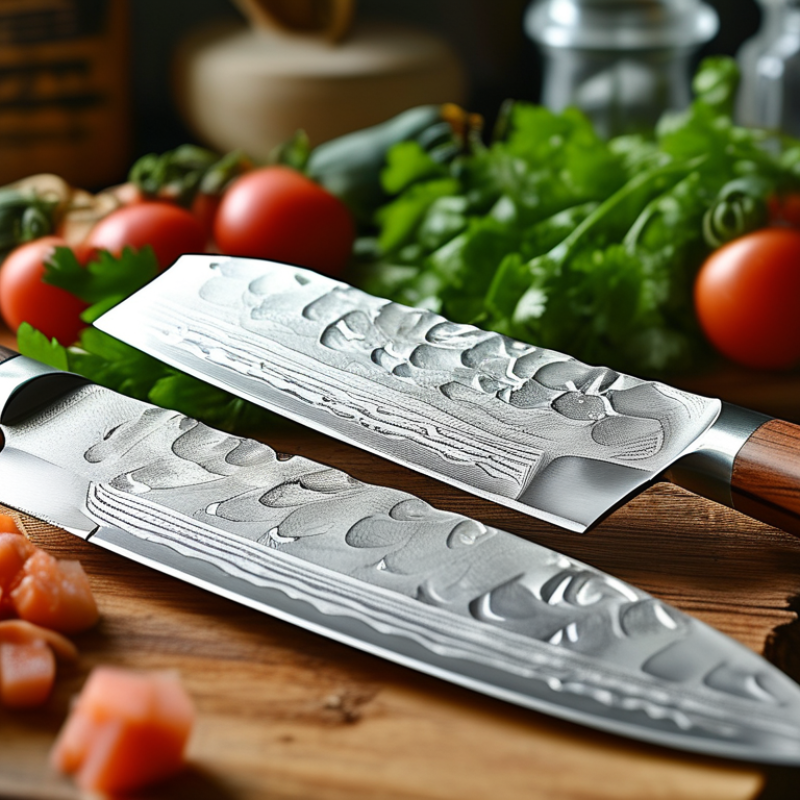
Differences in Blade Design: Chef Knives vs. Santoku Knives
When discussing the differences in blade design between chef knives and Santoku knives, several elements stand out. Chef knives typically feature a curved blade, ideal for rocking motion cuts. The blade length usually ranges from 8 to 12 inches, providing versatility for various tasks like slicing, dicing, or chopping. According to the Culinary Institute, this curvature allows chefs to achieve a more fluid cutting technique, enhancing efficiency in food preparation.
On the other hand, the Santoku knife presents a flatter blade profile with a slight curve towards the tip. This design promotes a straight-down cutting motion, which many find beneficial for precision tasks. Santoku blades generally range from 5 to 7 inches in length. Reports from kitchenware professionals indicate that this knife excels in thin slicing and delicate chopping, making it a favorite among home cooks for preparing vegetables and fish.
Blade thickness also plays a crucial role. Chef knives are often thicker, providing durability and strength. Santoku knives tend to be thinner, which enables cleaner cuts but can make them less forgiving for heavier tasks. Understanding these nuanced differences helps cooks make informed decisions based on their culinary needs and cutting preferences. Each knife type has strengths, yet the choice may require self-reflection on one’s cooking style and the specific tasks at hand.
Top 5 Differences Between Chef Knives and Santoku Knives
| Difference |
Chef Knife |
Santoku Knife |
| Blade Shape |
Curved blade for rocking motion |
Flat blade with a slight curve |
| Blade Length |
Typically 8 to 12 inches |
Usually 5 to 8 inches |
| Cutting Technique |
Rocking motion with a slicing technique |
Straight down chop, slicing, and dicing |
| Blade Material |
High-carbon stainless steel or other alloys |
High-carbon stainless steel, often thinner overall |
| Usage |
Versatile - suitable for various tasks |
Specialized for Asian cuisine, vegetables, and fish |
Purpose and Versatility: How Each Knife is Used
Chef knives and Santoku knives serve unique purposes in the kitchen, catering to different cooking styles. A chef knife is versatile, ideal for a range of tasks from slicing vegetables to butchering meat. Its curved blade design allows for a rocking motion, making it perfect for chopping. This knife's balance and weight give it an edge in precision tasks, though one might find it cumbersome when tackling delicate herbs.
On the other hand, the Santoku knife shines in more specialized tasks. Originating from Japan, it excels at slicing, dicing, and mincing without the added weight of a chef knife. The blade is typically shorter and has a straighter edge. This means it’s more suited for quick, agile movements, making it a favorite for home cooks focused on efficiency. However, it might not handle larger cuts of meat as effectively, which can lead to frustration in those situations.
Using either knife can reveal weaknesses in one's technique. A chef knife requires proper handling to avoid injury and improve efficiency. It can take time to master the rocking motion. Meanwhile, the Santoku’s design demands familiarity with its unique grip. If not used correctly, it may lead to fewer precise cuts. Ultimately, understanding the strengths and limitations of each knife can elevate one's cooking experience.
Edge Type and Sharpness: Comparing Cutting Performance
When comparing chef knives and Santoku knives, edge type and sharpness play crucial roles in cutting performance. Chef knives usually have a convex edge, allowing for rocking motions. This design enables a versatile range of cutting techniques, from chopping vegetables to slicing meat. Their sharpness is maintained through a continuous grind, which enhances their precision.
On the other hand, Santoku knives feature a flat edge with a slight curve. This shape is optimized for straight cutting and precision dicing. The sharpness of Santoku knives is often defined by their Japanese steel, making them remarkably fine. However, the edge may require more frequent honing to maintain performance. While they excel in vegetables and fish preparation, their flat profile may not suit all culinary tasks.
Each knife has its strengths and weaknesses. The choice between a chef knife and a Santoku knife should depend on personal cooking style. Feeling comfortable with your knife is vital. Knowing how each blade performs can enhance your efficiency in the kitchen. Whether you prefer one over the other might require some experimentation and reflection on your needs.
Top 5 Differences Between Chef Knives and Santoku Knives
Handle Style and Comfort: User Experience in Kitchen Tasks
When it comes to kitchen knives, handle style and comfort play a crucial role in user experience. Chef knives typically feature a traditional Western-style handle, often designed with a curved shape that fits well in the palm. This design allows for a secure grip during extended use. On the other hand, Santoku knives usually have a straight handle that offers a more neutral grip. This difference can influence comfort levels, especially during repetitive tasks like chopping vegetables, which can last for several minutes at a time.
Industry reports indicate that ergonomic handle designs can reduce fatigue by 30%. A well-shaped handle helps users maintain proper control and minimize stress on the wrist. Some chefs prefer Santoku knives for their balanced feel and lighter weight. This can reduce the chances of strain during long cooking sessions. However, the straight handle can feel less stable for those accustomed to a traditional grip.
Comfort is subjective and can vary among users. Some cooks might find the Santoku more comfortable, while others swear by the chef knife. It's important to hold both types to see which fits your hand best. Experimenting with different styles can lead to improved proficiency and enjoyment in the kitchen, but it’s essential to recognize that personal preference plays a significant role in these distinctions.
Maintenance and Care: Longevity of Chef and Santoku Knives
When it comes to maintaining the longevity of chef knives and santoku knives, proper care is crucial. The edge retention of a knife can diminish significantly without appropriate upkeep. Research by the Kitchen Knife Manufacturing Association indicates that regularly honing your knife can improve its lifespan by up to 30%. Regular honing helps maintain a sharp edge, which is essential for precision and safety in the kitchen.
Even with the best care, some users may overlook the importance of storage. Storing knives in a drawer can lead to blade damage and dullness over time. Magnetic strips or knife blocks are recommended for safe storage. According to a report by the Culinary Institute, users who employ these methods can extend the lifespan of their knives by 20%. A clean, organized workspace contributes to better maintenance.
Keep an eye on those pesky rust spots. Both chef and santoku knives are often made from high-carbon steel, which can corrode easily. Regularly cleaning with a gentle, non-abrasive sponge is essential. After washing, ensure your knife is completely dry before storage. It’s often the small details that can make a significant difference in knife care and ultimately in your cooking experience.
FAQS
: Chef knives are versatile for slicing, dicing, and butchering. Santoku knives excel at precise cutting tasks but are less effective for large meats.
Chef knives have a curved blade for rocking motions, while Santoku knives feature a flat edge for straight cuts.
Yes, chef knives require practice to master their technique. Santoku knives demand familiarity with the unique grip for precise cuts.
Chef knives maintain sharpness through a continuous grind, while Santoku knives often need more frequent honing to keep their fine edge.
Chef knives have curved handles for a secure grip. Santoku knives offer a straight handle, which can feel unstable for some users.
Yes, the choice depends on personal cooking preferences. Experimentation can help find the knife that suits individual needs best.
Absolutely, ergonomic handles reduce fatigue. A comfortable knife may enhance control and reduce wrist strain during long cooking sessions.
No, preferences vary widely. Some find Santoku knives more comfortable, while others prefer chef knives. It's subjective.
Experimenting with both knife types can enhance skills. Recognizing comfort and control is key in achieving better results.
Consider handle comfort, blade design, and personal cooking style. Each knife has its strengths and weaknesses to reflect upon.
Conclusion
In exploring the question of what are the differences between chef knives and santoku knives, several key aspects come into play. First, their blade designs differ significantly; chef knives typically feature a curved blade for rocking motions, while santoku knives have a flatter edge and a more pronounced tip for precise tasks. Additionally, the two knives serve different purposes; chef knives are versatile for a variety of cuts, whereas santoku knives excel in slicing, dicing, and mincing.
When considering edge type and sharpness, santoku knives often boast a finer edge, enhancing their cutting performance for ingredients such as vegetables and fish. Handle styles also vary, with chef knives usually offering more variety for user comfort, impacting the overall kitchen experience. Finally, maintenance and care are crucial for both types, as proper upkeep ensures longevity and performance in culinary tasks. Understanding these differences helps cooks choose the right tool for their needs.

 Eco Best Kitchens