Why Are Different Knives Essential for Every Type of Food?

Time:2026-05-11 Author:Aria
0%

Knives are essential tools in the kitchen. They come in various shapes and sizes, each designed for specific tasks. Understanding why different knives are needed for different foods is crucial for any cooking enthusiast. Each knife serves a unique purpose, enhancing efficiency and safety in food preparation.

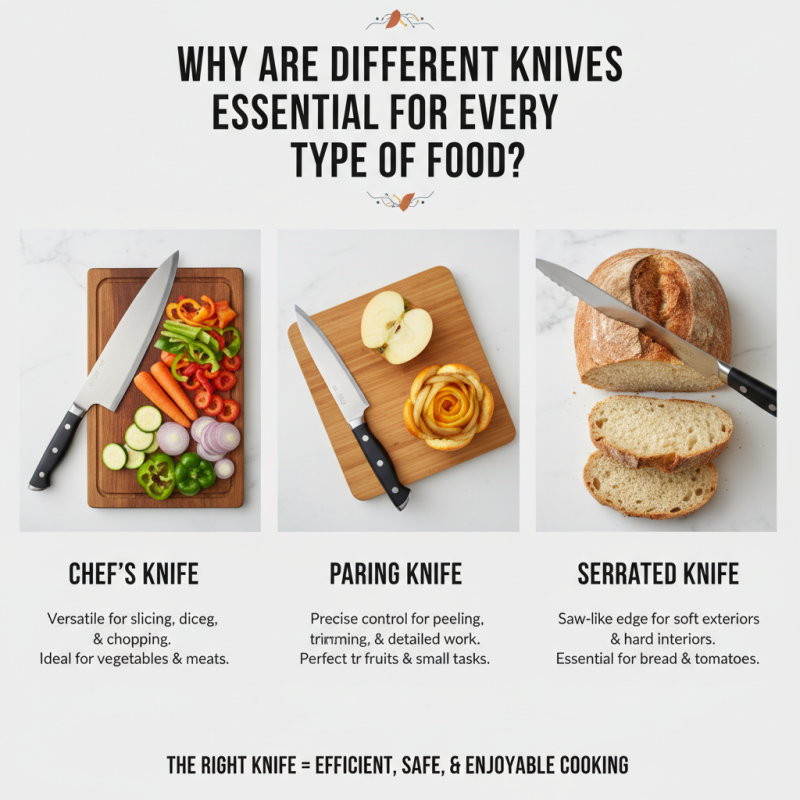
For instance, a chef's knife is perfect for slicing vegetables, while a paring knife excels at intricate tasks, like peeling fruit. A serrated knife is essential for cutting bread without crushing it. These distinctions impact how we prepare and enjoy our meals. The right knife can lead to cleaner cuts and reduce food wastage.

However, many often overlook the importance of choosing the right knife. Using the wrong tool can result in frustration and even injury. It can hinder the cooking process and diminish the quality of the food. Recognizing why different knives are needed for different foods transforms the kitchen experience. Understanding this can elevate culinary skills and inspire creativity in cooking.
Why Are Different Knives Essential for Every Type of Food?

Types of Knives and Their Specific Uses in Food Preparation

Knives are essential tools in the kitchen. Different types serve various food preparation needs. For instance, a chef’s knife is versatile. It handles chopping, slicing, and dicing with ease. Use this knife for vegetables and meats alike.

A paring knife is smaller. It's perfect for intricate tasks like peeling fruit. Precision is key in this task. A serrated knife excels at cutting bread. The saw-like edge slices through crusts without squishing the soft interior.

Tip: Keep your knives sharp. A dull knife is unsafe and inefficient. Regular honing maintains the edge and enhances control.

Tip: Store knives properly. Use a magnetic strip or knife block. This protects the blades and prevents accidents. Always cut away from your body, maintaining safety while preparing meals.

Experiment with each knife in your kitchen. Understand their strengths and weaknesses. Even experienced cooks can refine their skills and discover new methods.

The Importance of Using the Right Knife for Each Food Type

Using the right knife for each food type is paramount in culinary practice. Different knives serve distinct purposes that enhance both safety and efficiency. A chef's knife, for instance, is versatile. It can chop vegetables and slice meats with ease. However, attempting to use it on delicate herbs can lead to bruising. Each food deserves a specific approach.

Consider the paring knife. It excels at peeling fruits and preparing garnishes. Using a large knife for these tasks can result in accidents. The precision of a smaller blade is crucial for intricate work. Similarly, a serrated knife is ideal for bread. Its design prevents crushing while slicing through a crust.

Improper knife choice can lead to frustration and unsafe practices. A dull knife increases the risk of injury. On the other hand, an appropriate knife enhances the cooking experience. Understanding how to choose the right knife requires practice and knowledge. Awareness of specific food properties can guide better choices. A thoughtful approach encourages a deeper connection to food preparation.

How Knife Materials Affect Performance and Food Safety

Choosing the right knife for different foods depends largely on the materials used in their construction. Chef knives, for example, are often made from stainless steel, which resists rust and preserves sharpness. However, some may prefer carbon steel for its superior edge retention. Each material affects both the performance and the safety of food preparation.

When using ceramic knives, they remain sharp longer but can chip easily if dropped. This fragility makes them less ideal for heavy-duty tasks. A wooden cutting board can protect both the knife and the board, preserving the knife's blade. When considering knife safety, it's crucial to maintain a sharp edge. Dull knives require more force, increasing the chance of slipping and causing injury.

Tips: Always clean knives right after use to prevent rust. Store them in a knife block or magnetic strip to avoid accidents. Regularly hone your knives to keep them sharp; a well-maintained knife promotes safety and efficiency in the kitchen. Reflect on your cutting habits. Are you using the right knife for the task? It’s worth evaluating.

Techniques for Proper Knife Handling and Maintenance

Proper knife handling and maintenance are fundamental skills for any home cook. Understanding how to hold a knife correctly can enhance both safety and efficiency. Fingers should curl around the grip, guiding the blade with precision. The knuckle should act as a guide, keeping fingers safe. This technique allows for better control and reduces the risk of accidents.

Cleaning knives properly is just as important. Avoid soaking knives in water for too long. This can lead to rust and damage. Instead, wash them immediately after use and dry them thoroughly. Storing knives correctly also impacts their longevity. A dedicated knife block or magnetic strip can protect blades from dulling. Some may find this cumbersome, but it pays off in the long run.

Sharpening knives regularly is a vital part of maintenance. A sharp knife is safer because it requires less force. Many might overlook this step or avoid it, thinking it’s unnecessary. However, dull knives can slip and cause injuries. Investing in a quality sharpening tool or learning from professionals can yield significant benefits. These practices will elevate your cooking experience and ensure your knives last longer.

Culinary Efficiency: Enhancing Cooking Experiences with the Right Knives

When it comes to culinary efficiency, having the right knives makes all the difference. Each knife serves a unique purpose, designed to handle specific food types with ease. For instance, a chef’s knife shines in chopping vegetables, while a paring knife excels at peeling fruits. This specialization enhances your cooking experience significantly. With the right tool, tasks become simpler and faster.

Using an incorrect knife often leads to frustration. A serrated knife misused on delicate meats can tear, ruining texture and flavor. This highlights the importance of selecting the appropriate knife for each task. Chefs learn to appreciate this through practice, understanding that precision is key in culinary arts. Over time, proper knife selection can save significant preparation time, boosting overall kitchen efficiency.

Ultimately, the art of cooking thrives on balance. Selecting the wrong knife occasionally can lead to valuable lessons. It’s essential to refine your skills continually and reflect on your choices. Each experience teaches the importance of investing time in understanding your tools, ensuring you achieve the best results with every dish you create.

FAQS

: Why are different types of knives important in the kitchen?

: Each knife serves a unique purpose, making food preparation simpler and faster.

How do I maintain knife sharpness?

Regularly hone your knives. A sharp knife is safer and more efficient.

What should I avoid when cleaning my knives?

Do not soak knives in water for long. It can cause rust and damage.

How should I store my knives?

Use a knife block or magnetic strip. This protects the blades and prevents dulling.

Why is proper knife handling important?

Proper handling enhances safety and efficiency, reducing the risk of accidents.

Can I use a serrated knife on meats?

No, using a serrated knife on delicate meats can tear them, ruining the texture.

How can I improve cooking efficiency with knives?

Understanding each knife's purpose can significantly streamline your food preparation process.

What is a common mistake with knife maintenance?

Many overlook regular sharpening, thinking it’s unnecessary, but dull knives can slip and cause injuries.

How can I make the most of my knife skills?

Experiment with different knives and continuously refine your techniques with practice.

What is a lesson learned from using the wrong knife?

It highlights the importance of selecting the right tool, which can enhance cooking results.

Conclusion

Different knives are essential for every type of food due to their unique designs and functionalities tailored to specific culinary tasks. Understanding why different knives are needed for different foods allows cooks to prepare ingredients efficiently and safely. Each knife type, from chef's knives to paring knives and serrated blades, serves distinct purposes, ensuring optimal cutting techniques that enhance both the texture and flavor of various ingredients.

Moreover, the materials used in knife construction significantly impact performance and food safety, as well as the overall cooking experience. Proper knife handling and maintenance techniques are crucial for longevity and effectiveness, allowing cooks to harness culinary efficiency. By utilizing the right knives for each food type, one can elevate their cooking experiences, making food preparation more enjoyable and effective.

Aria

Aria

Aria is a dedicated marketing professional with a deep passion for innovative strategies and a keen understanding of our company's product offerings. With a wealth of experience in the industry, Aria excels at crafting engaging content that highlights the unique features and benefits of our......