A glass cutting board looks clean even when invisible residue remains. That is why knowing how to clean and maintain glass cutting boards matters beyond appearance. Glass is nonporous, so it does not absorb food juices like some wood surfaces. Still, crumbs and grease can cling around edges, corners, and textured patterns. A quick rinse is not enough.
Food-safety specialist Ben Chapman of North Carolina State University emphasizes cleaning food-contact surfaces between tasks. In paraphrase, his practical advice is: wash the board with hot, soapy water, then let it dry fully. Use a soft sponge and pay attention to the underside, where moisture can collect against the counter. If the manufacturer says the board is dishwasher-safe, that can make cleanup easier. Otherwise, follow its care instructions. Simple steps matter.
For raw meat, poultry, or seafood, wash the board promptly before using it for ready-to-eat foods. Dry it with a clean towel or let it air-dry upright. Check the surface and edges for chips or cracks; replace a damaged board rather than keep using it. Glass can also be hard on knife edges. That trade-off is easy to overlook. A board may look pristine while making knives dull faster, so use a separate cutting surface when knife sharpness matters. Avoid sudden temperature changes, too, unless the maker confirms the board can handle them. These habits are practical, but they are not a substitute for the product’s care label. Cleaning well is routine. Maintaining well means noticing small problems early.
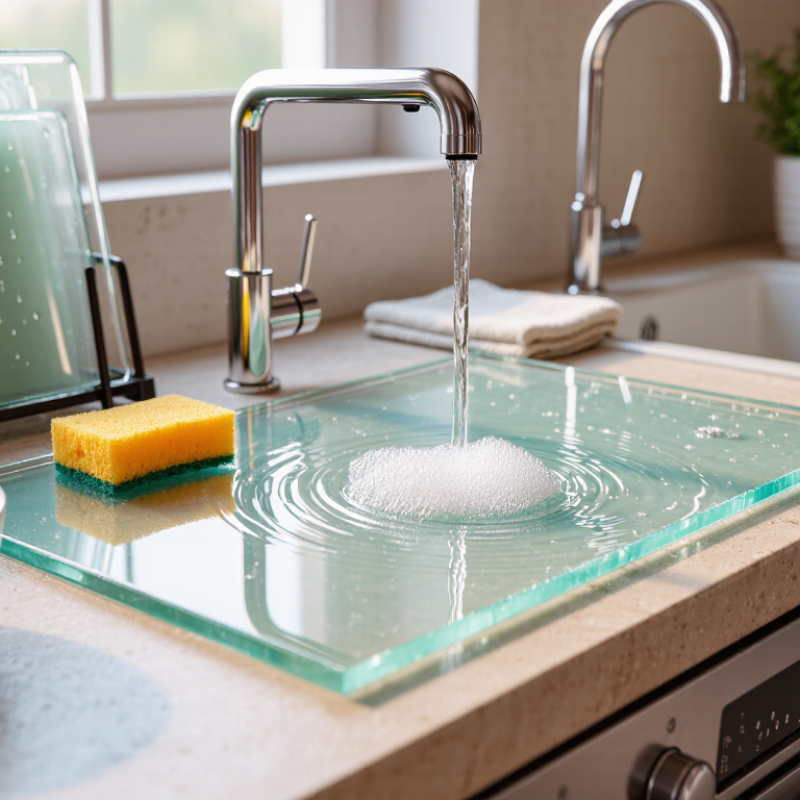
Glass cutting boards are nonporous, so juices and odors are less likely to soak into the surface than they are with wood. That does not make them maintenance-free. The hard, smooth surface can dull knife edges quickly, and the board may slide if the counter is wet. Place a slightly damp towel underneath before chopping. Stability matters. Check the corners and edges for chips or hairline cracks; damaged glass should not be used for food preparation.
Care is simple, but a little restraint helps. Wash the board with warm water and dish soap after use, paying attention to dried-on food around the edges. Rinse well and dry it with a clean towel to reduce water spots. Keep it dry. Many glass boards are dishwasher-safe, but check the care instructions rather than assuming. Avoid dropping the board or moving it straight from a very hot place to cold water, since sudden temperature changes can stress glass. A rough scrubber may leave marks or make the surface look cloudy over time. It is easy to focus on sanitation and forget the knife itself; that trade-off deserves consideration before choosing glass for everyday chopping.
Before cleaning, move the glass board to a clear, well-lit counter. Remove knives and food scraps, then check both sides for chips or cracks. Damaged glass can cut your hands, so stop handling the board if you find an edge that feels rough. It is easy to miss a tiny chip. Look closely.
Keep the board steady during washing. Place a flat, damp towel underneath; a bunched cloth can make the board wobble. Let a hot board cool before adding water, since a sudden temperature change may stress the glass. Scrape away stuck food with a soft plastic utensil, not a knife or metal scraper. Rinse loose crumbs away first, so they do not drag across the surface. I sometimes rush this part, and it leaves grit near the corners. Check the sink, too: hard objects nearby can knock against the glass. Keep the board separate from dishes while you prepare mild dish soap and a soft sponge. If the board is cracked, skip washing it for reuse; wrap it carefully for disposal according to local guidance.
After everyday food preparation, scrape loose crumbs and scraps into the bin before they dry onto the glass. Rinse the board with warm water, then wash both sides with dish soap and a soft sponge. Pay attention to the corners and any textured areas, where oily residue can linger. Rinse until the surface no longer feels slippery. Rinse it promptly.
For stuck-on food, let warm, soapy water sit on the spot for a few minutes rather than scraping hard with a knife. A nonabrasive sponge helps prevent unnecessary scuffs. Dry the board with a clean towel, or stand it upright on a rack so air can reach both sides. It is easy to rush this step; water trapped beneath a board can leave the counter damp.
If the board is labeled dishwasher-safe, follow its care instructions and place it securely so it cannot knock against other dishes. Avoid sudden temperature changes, such as pouring boiling water onto a cold board, since glass can crack from thermal shock. Check the edges now and then for chips or cracks. A damaged board may be harder to clean thoroughly, so stop using it for food preparation if you find any.
After everyday food preparation, wash the board with hot, soapy water and rinse it well. Sanitize it after contact with raw meat, poultry, or seafood, following the sanitizer label directions. Let the board air-dry completely before storing it.
After cutting food, rinse the glass board promptly so juices do not dry into a film. Wash both sides with warm water, a little dish soap, and a soft sponge. Rinse well, then dry with a clean towel to prevent water spots. For stains, spread a paste of baking soda and water over the mark. Leave it for a few minutes, then wipe gently and rinse. Keep the pressure light. Avoid steel wool, gritty scouring powders, and sharp scrapers; they may damage printed markings or leave the surface looking cloudy. Glass is sturdy, but sudden temperature changes can still cause cracking, so do not pour boiling water onto a cold board.
Odors often come from residue around corners or beneath the board, not from the glass itself. Clean those areas carefully, then let the board air-dry upright. For lingering smells, rub a little baking soda paste over the area, wait briefly, and rinse thoroughly. A soft cloth dampened with diluted white vinegar may help with residue, but test a small spot first, especially if the board has printed decoration. Do not mix cleaning products. If a stain remains, it may be permanent rather than dirty; repeated hard scrubbing can do more harm than good. I sometimes rush the drying step, and that is when water marks show up. A few extra seconds with a towel helps.
| Cleaning Need | Recommended Method | Practical Steps | What to Avoid | When to Do It |
|---|---|---|---|---|
| Routine cleaning | Warm water and ordinary dish soap | Rinse away food debris, wash both sides with a soft sponge or cloth, then rinse thoroughly and dry with a clean towel or air-dry. | Leaving food residue to dry on the surface or using a scouring pad that could scratch printed or coated areas. | After each use |
| Greasy residue | Dish soap and warm water | Apply dish soap directly to the greasy area, gently wipe with a soft sponge, and rinse until the surface no longer feels slick. | Using sharp tools to scrape residue from the glass. | As soon as practical after cooking |
| Food stains | Soap first; use a mild baking-soda paste only on plain, uncoated glass if needed | Wash with soap and water. For a persistent mark on undecorated glass, gently rub a small amount of baking soda mixed with water, then rinse well. | Applying abrasive cleaners or baking soda to printed, painted, coated, or otherwise decorated surfaces unless the care instructions allow it. | When a stain remains after routine washing |
| Unpleasant odors | Thorough washing with dish soap and prompt drying | Wash both sides and the edges, rinse thoroughly, and dry completely. Check the board and nearby storage area for trapped food residue. | Covering an odor with fragrance or storing the board while damp. | After preparing strongly scented foods or whenever an odor persists |
| Dishwasher cleaning | Follow the board’s care instructions | Use a dishwasher only if the manufacturer’s instructions say the specific board is dishwasher-safe. Place it securely so it cannot strike other items. | Assuming every glass board is dishwasher-safe, or exposing a hot board to cold water. | As directed for the specific board |
| Sanitizing after raw meat, poultry, seafood, or eggs | Clean first, then use a food-contact sanitizer according to its label and the board’s care instructions | Wash off visible soil before sanitizing. Follow the sanitizer’s stated concentration, contact time, rinsing directions, and surface-use instructions. | Mixing cleaning chemicals, exceeding label directions, or using a product not labeled for food-contact surfaces. | After handling raw animal foods and before using the board for ready-to-eat food |
| Water spots or soap film | Rinse thoroughly and dry with a lint-free cloth | After washing, give the board a final rinse and dry it rather than leaving droplets to evaporate. | Using metal scrapers or harsh scouring materials to remove marks. | After washing, especially in areas with hard water |
| Storage and surface care | Store clean and completely dry | Keep the board in a stable position where it cannot fall or knock against hard objects. Use any protective feet or supports provided with it. | Dropping, striking, or placing heavy items on the board; sudden temperature changes can also stress glass. | After every wash and whenever the board is not in use |
| Chips, cracks, or sharp edges | Stop using the board and replace it | Inspect the surface and edges regularly. Remove a damaged board from food preparation to reduce the risk of cuts or glass fragments. | Continuing to use a cracked or chipped board, or attempting a household repair. | Whenever damage is noticed |
Care note: Glass is nonporous, but it is harder than most kitchen-knife edges and can dull knives faster than wood or plastic. Use a glass board only if it suits your cutting needs, and follow the care instructions supplied with the specific board.
After washing a glass cutting board with hot, soapy water, inspect it under bright light. Look for chips, cracks, rough patches, or sharp edges, especially around the corners. A damaged surface is harder to clean thoroughly and may cut fingers. Retire a board with a deep crack or loose fragment.
The CDC estimates that foodborne illness affects about 48 million people in the United States each year. That figure covers many causes, but it is a useful reminder that small kitchen habits matter. Inspection takes seconds.
Drying deserves equal attention. Rinse away soap, then wipe the board with a clean towel and stand it upright so air can reach both sides. Don’t slide it straight into a tight cabinet while damp. Moisture trapped against another surface can leave stale odors and encourage grime around edges or supports. Store the board on a stable rack, away from heavy pans that could strike or chip it. Avoid sudden temperature changes, too; moving very hot glass onto a cold surface may cause damage. It is easy to rush this part. A board can look clean and still be poorly stored.
CDC, “Estimates of Foodborne Illness in the United States,” 2011.
Move it to a clear, well-lit counter. Remove knives and food scraps, then check both sides for damage.
Place a flat, damp towel underneath. A bunched towel can make the board wobble.
No. Let it cool first. Sudden temperature changes may stress the glass.
Rinse away loose crumbs, then use a soft plastic utensil. Avoid knives and metal scrapers. Grit can scratch the surface.
Check the corners and edges under bright light. Look for chips, cracks, rough patches, or loose fragments.
No. Stop handling it for reuse. Wrap it carefully and follow local disposal guidance.
Rinse off the soap, wipe it with a clean towel, and stand it upright. Let air reach both sides.
Use a stable rack, away from heavy pans. Don’t put it in a tight cabinet while damp.
Rinsing crumbs away first. I sometimes rush it, and grit collects near the corners.
This guide explains how to clean and maintain glass cutting boards with simple, careful routines that help keep them hygienic and in good condition. Before cleaning, clear away food scraps and check that the board is stable and free of chips or cracks. After everyday food preparation, wash both sides with warm water, dish soap, and a soft sponge, then rinse thoroughly. Avoid abrasive pads and harsh cleaning methods that could scratch or weaken the surface.
For stubborn stains or lingering odors, use gentle household cleaning methods and allow the board to soak briefly when appropriate, then rinse it well. Inspect the surface regularly, since damaged glass may be unsafe to use. Dry the board completely with a clean towel or let it air-dry before storing it upright or in a secure, cushioned spot. These steps make caring for a glass cutting board straightforward while supporting a clean and safe kitchen routine.

Eco Best Kitchens