How to Store Knives Safely at Home?

Time:2026-09-08 Author:Charlotte
0%

A safe kitchen begins with thoughtful knife storage, not merely a clean countertop. Knowing how to store knives safely at home protects children, guests, pets, and your own hands. It also preserves sharp edges, reduces blade damage, and keeps cooking areas easier to manage.

In my experience, loose knives in drawers create unnecessary risks. Blades can overlap, handles may shift, and reaching for one can cause accidental cuts. A crowded utensil drawer is especially troublesome. Better options include a secured knife block, an under-cabinet magnetic system, or individual blade guards inside a dedicated drawer. Each choice should match your household, available space, and daily habits.

Safety requires more than buying attractive storage. A knife block should stand firmly and keep each blade fully enclosed. Magnetic storage must be mounted securely and placed beyond easy reach of children. Knives should be clean and completely dry before storage, because moisture can encourage corrosion and unpleasant odors. Store them with handles facing outward when practical. Never leave a knife hidden beneath towels, dishes, or food scraps.

Small details matter.

Still, no method is perfect. I once assumed a deep drawer was safe until a loose utensil blocked the handle. That mistake changed how I check storage areas. This guide will examine practical storage choices, common errors, cleaning habits, and household safety checks. The goal is simple: safer access, better knife care, and fewer surprises in the kitchen.
How to Store Knives Safely at Home?

Assess the Main Risks of Knife Storage at Home

Storing knives safely begins with identifying how accidents actually happen. The sharp edge is only one risk. A loose knife can slide under a cloth, fall from a crowded counter, or cut a hand searching in a drawer. In my own kitchen checks, I look at the knife’s position, handle visibility, and nearby movement. A safe location should be stable, dry, and easy to reach without leaning across heat or clutter. It sounds obvious, but rushed storage often defeats careful habits.

Children and visitors create a separate concern. A low drawer, open countertop, or unsecured block may invite curiosity. Even a blunt-looking handle can become dangerous when someone pulls the wrong tool. Keep knives away from edges and store them with blades covered or fully enclosed. A drawer divider can prevent edges from touching other utensils. However, dividers shift over time. I have found that checking them monthly is sensible, although I sometimes forget.

Moisture and poor maintenance add quieter risks. A wet knife may corrode, develop a slippery handle, or transfer residue to another surface. Dry each knife before storage, and inspect the handle, cover, and storage fitting for looseness. Do not force a damaged knife into a tight slot. Falling objects are another hazard, especially when storage is mounted high or near a busy walkway. Test stability gently, keep the area clear, and change the arrangement when daily use reveals a problem.

Choose a Storage Method That Matches Your Space and Needs

How to Store Knives Safely at Home?

Choose a storage method that matches your kitchen, habits, and available space. A countertop block works well when you use several knives daily and have a stable, dry surface. Keep it away from the counter edge, sink, and cooking heat. The slots should hold each knife firmly without forcing the blade downward. Pull knives out by the handle, not by reaching over exposed edges. It sounds obvious, but rushed mornings change good habits.

A wall-mounted magnetic strip can save valuable counter space in a small kitchen. Install it securely into a strong wall surface, and place it high enough to stay away from children. The knife spine should meet the strip gently, rather than striking it hard. Leave space between knives so handles do not collide. I once stored two large knives too close together; removing one became awkward and unsafe. That arrangement needed changing sooner.

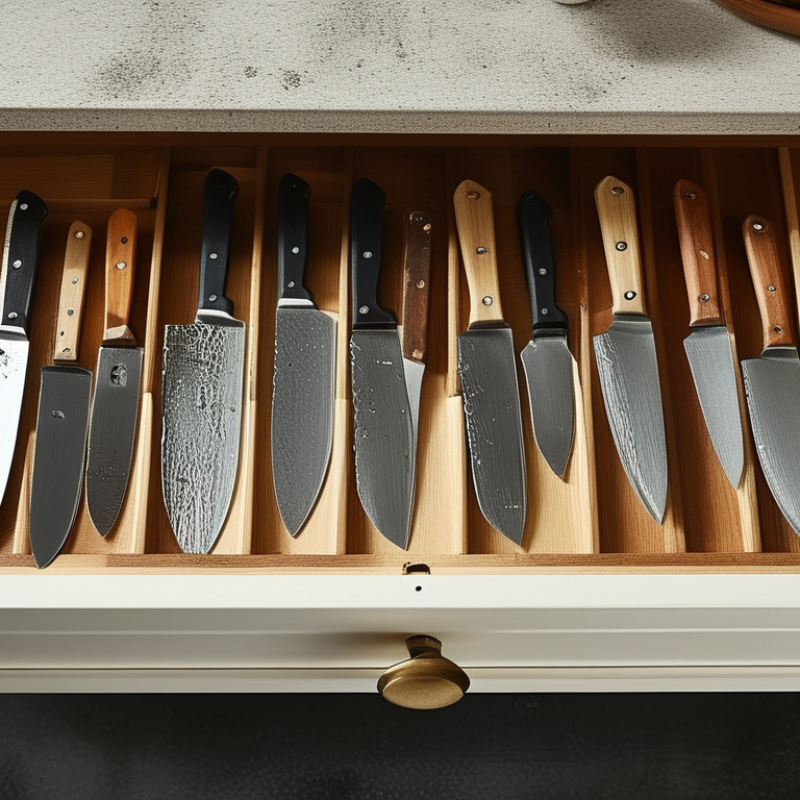
For homes with children, shared kitchens, or limited wall space, a drawer insert with individual slots may be safer. Use a dry drawer, keep blades pointed away from the opening, and avoid stacking loose knives underneath utensils. Blade guards provide another option for occasional-use knives stored in a cabinet. Check the guards regularly for cracks or looseness. Humid areas deserve extra attention, since moisture can encourage staining and corrosion. A quick wipe after washing helps, although I sometimes forget and find that “almost dry” is not dry enough.

Prepare Knives Before Placing Them in Storage

How to Store Knives Safely at Home?

Prepare Knives Before Placing Them in Storage

A safe storage routine begins before the knife reaches its drawer. Wash the blade with warm water and mild dish soap. Dry it immediately with a clean towel. Moisture can encourage corrosion around the edge and handle joints. I also inspect the blade under bright light. Small chips, loose handles, or bent tips deserve attention before storage.

The U.S. Consumer Product Safety Commission’s National Electronic Injury Surveillance System tracks thousands of knife-related emergency visits each year. Its data shows why preparation matters, not just storage design. A dirty blade can transfer residue to nearby utensils. A loose knife can shift when the drawer opens. Use a fitted sheath, blade guard, or secure knife block. The protective cover should fully enclose the edge without pressing against it. Never store a wet knife.

Tips: Keep handles facing outward. Separate knives from forks. Place heavier tools lower. Check the guard regularly.

I have found that rushed cleaning causes most storage mistakes. A quick wipe may leave moisture near the bolster. That area is easy to miss. Before closing the drawer, run a dry cloth along the spine and handle. Do not test sharpness with a finger. A folded paper towel can reveal moisture safely. USDA food-safety guidance also emphasizes cleaning and drying food-contact tools after use, which supports this routine. Still, no method is perfect. Children, crowded drawers, and poor lighting can defeat careful habits. Recheck the setup after a few days.

How to Store Knives Safely at Home? - Prepare Knives Before Placing Them in Storage
Preparation Stage Recommended Action Reason Suitable Storage Option Safety Check Before Storage
Remove food residue Rinse the blade with warm water and wash it with mild dish soap using a soft sponge. Food particles and acids can contribute to odors, staining, and corrosion. Any clean, dry knife-storage system. Blade is visibly clean.
Clean the handle and bolster Wipe the handle, rivets, and junction between the blade and handle. Avoid leaving moisture in narrow gaps. Residue and moisture around the handle can encourage bacterial growth and material deterioration. Knife block, drawer insert, magnetic strip, or protective sheath. No grease or residue remains around the handle.
Dry immediately Dry the entire knife with a clean, lint-free towel, including both sides of the blade and the handle. Water left on metal surfaces may cause corrosion, especially during long-term storage. All storage methods. No visible water droplets or damp areas remain.
Inspect the blade Check for chips, cracks, deep rust, loose components, or other damage before putting the knife away. Damaged knives may be unsafe to handle and can worsen when stored or used. Separate area for damaged knives awaiting repair or disposal. Do not store a knife with a cracked blade or loose handle for normal use.
Remove surface rust safely For minor surface rust, use a suitable non-abrasive cleaning method and dry the blade thoroughly afterward. Seek professional help for severe damage. Rust can spread and may weaken or roughen the blade surface over time. Dry storage after the rust has been removed. Rust spots have been treated and the blade is completely dry.
Check sharpness and edge condition Inspect the cutting edge visually and handle the knife carefully. Sharpen only with a method appropriate for the knife. A damaged or irregular edge may increase the risk of slipping during the next use. Protective sheath, knife block, drawer insert, or dedicated knife case. Never test sharpness by running a finger along the edge.
Choose individual protection Cover each blade with a properly fitting sheath or blade guard when storing knives in a drawer, case, or transport container. Individual protection helps prevent accidental cuts and reduces contact between blades. Protective sheath or blade guard. The cover is secure and does not expose the cutting edge.
Separate knives in drawers Use a fitted drawer insert with separate slots instead of placing loose knives together. Separating blades reduces hand injuries, edge damage, and accidental contact during retrieval. Knife drawer insert with individual compartments. Each knife has its own slot and the drawer closes without pressure.
Position a magnetic storage strip correctly Install the strip securely on a wall and keep it out of reach of children. Place and remove knives by the spine or handle, not by the cutting edge. A secure mounting surface reduces the risk of the strip or knife falling. Wall-mounted magnetic knife strip. Do not use a loose, damaged, or poorly mounted strip.
Use a knife block safely Place the block on a stable, dry, level surface and insert knives with the cutting edge positioned safely inside the slot. Stability prevents tipping, while correct insertion protects hands and blade edges. Stable knife block with appropriately sized slots. The block does not wobble and each knife fits without force.
Control the storage environment Store knives in a dry, ventilated location away from sinks, steam, standing water, and excessive heat. Low moisture helps reduce corrosion, mold, and deterioration of handles or storage materials. Dry kitchen drawer, block, cabinet, or wall storage. The storage area is dry, clean, and free from water leaks.
Keep knives away from children Use a high or secured storage location, and consider a child-resistant drawer or cabinet where appropriate. Knives are sharp tools that can cause serious injuries if accessed unsupervised. Locked or child-resistant cabinet, high wall storage, or secured drawer. Children cannot reach or open the storage area without supervision.
Store knives separately from loose utensils Do not place uncovered knives beneath forks, spoons, or other objects. Hidden blades create a risk of accidental cuts when searching through a drawer. Dedicated knife compartment or covered storage. The blade cannot be concealed by unrelated utensils.
Perform a final storage check Confirm that the knife is clean, dry, undamaged, protected where necessary, and stored with the handle accessible. A final check reduces risks during both storage and later removal. Any secure storage method suited to the knife and household. Knife is secure, identifiable, and safe to retrieve.

Install and Use Knife Storage Safely

How to Store Knives Safely at Home?

Install and Use Knife Storage Safely

Choose a storage location away from children, pets, and busy counter traffic. A drawer insert should sit flat and prevent blades from touching each other. For wall-mounted storage, use strong screws and secure the holder to a stud when possible. Always follow the storage unit’s installation instructions. A loose holder can turn a careful kitchen into a hazard.

Keep knife handles facing outward, so you can identify each tool before lifting it. Place the largest knives in separate slots, with their blades fully covered or enclosed. Pull one knife out at a time, using a firm grip on the handle. Never reach blindly into a crowded drawer. Keep hands dry. It matters.

After washing, dry each knife completely before storage. Moisture trapped inside a holder may encourage corrosion or mold. Check screws, slots, and covers every few weeks. Replace damaged parts instead of improvising with tape or loose cardboard. I once stored a knife in an overfilled drawer, thinking the handle was easy to find. It was not. The crowded space made the blade shift, which reminded me that convenience can weaken a safety system.

Teach household members the same routine, especially where children share the kitchen. Store rarely used knives in a closed, secured compartment. If a knife feels stuck, stop and reposition it rather than forcing it. Small habits protect fingers.

Inspect and Maintain the Storage Area Regularly

How to Store Knives Safely at Home?

A safe knife storage area needs more than a drawer or wooden block. Inspect it regularly for loose parts, moisture, dust, and unstable surfaces. A damp cabinet can encourage corrosion, while a shifting block may let a knife slide out unexpectedly. Keep handles easy to grasp, and leave enough space between blades. Crowded storage increases the chance of cuts during normal use.

Check the area every few weeks, especially after cleaning or moving furniture. Wipe the surface with a dry cloth, tighten loose screws, and replace cracked holders. Magnetic storage should sit firmly against the wall, with no visible gaps. The magnet must hold each knife securely, but it should not require forceful pulling. I once focused too much on blade condition and overlooked a loose mounting point. That mistake changed my inspection routine.

Tips:
  • Keep storage away from children and busy walkways.
  • Dry knives completely before storing them.
  • Place heavier knives lower when possible.
  • Test stability gently, not with a sharp blade.
  • If a holder feels damaged, stop using it until repaired or replaced.
  • A small label can remind household members to return each knife properly.
  • Do not stack uncovered knives in a drawer. That habit seems convenient, but it creates hidden contact between hands and blades.

FAQS

: What is the safest place to store kitchen knives?

: Choose a dry area away from children, pets, sinks, heat, and busy counter traffic. Keep storage away from the counter edge. A stable location matters.

Is a countertop knife block suitable for daily use?

Yes, if you use several knives often and have a stable, dry counter. Keep each blade in a firm slot. Pull knives out by their handles. Do not force blades downward.

How can a wall-mounted magnetic strip save space safely?

Install it securely on a strong wall surface. Use strong screws, and attach it to a stud when possible. Keep it high and away from children. Let the knife spine touch gently.

How much space should remain between stored knives?

Leave enough room for handles to avoid colliding. Separate large knives from smaller tools. Crowded handles can make removal awkward. I once ignored this. It needed changing sooner.

Are drawer inserts safer for shared kitchens?

A drawer insert can help in homes with children or shared kitchens. Choose one with individual slots. Keep the drawer dry and flat. Never reach blindly into a crowded drawer.

How should rarely used knives be stored?

Store them in a closed, secured compartment with blade guards. Check guards for cracks or looseness. Do not stack loose knives beneath utensils. Occasional use still needs careful storage.

Should knives be dried before storage?

Yes, dry every knife completely after washing. Moisture inside a holder may encourage staining, corrosion, or mold. A quick wipe helps. “Almost dry” is not dry enough.

What should I do if a knife feels stuck?

Stop and reposition it instead of forcing the knife. Use a firm grip on the handle. Keep your hands dry. Small habits protect fingers.

Conclusion

Learning how to store knives safely at home begins with understanding the main risks, including accidental cuts, exposed blades, unstable storage, and access by children or pets. Choose a storage method that suits your kitchen layout, household needs, and available space. Options should keep blades protected, prevent knives from shifting, and allow you to retrieve them without reaching across sharp edges. Before storage, clean and dry each knife thoroughly, check that the blade and handle are in good condition, and place it securely in its intended position.

When considering how to store knives safely at home, installation and daily use are just as important as the storage method itself. Make sure the storage area is firmly secured, easy to access, and positioned away from crowded work zones. Return each knife carefully after use, keeping fingers away from the blade. Regularly inspect the holder, drawer, or container for looseness, moisture, damage, or accumulated debris, and repair or replace it when necessary to maintain a safe and organized kitchen.

Charlotte

Charlotte

Charlotte is a seasoned marketing professional with a deep understanding of the company's portfolio and a passion for elevating its presence in the market. With a keen eye for detail and a commitment to excellence, she ensures that our professional blog is regularly updated with insightful articles......