Cutting boards face a quiet daily battle. Raw onions leave sharp odors. Beets create deep red stains. Moisture then settles into knife marks, where careless cleaning may miss it. Learning how to prevent stains and odors on cutting boards starts with understanding these small causes.
A reliable routine begins immediately after food preparation. Scrape away residue, wash the board with hot water and mild dish soap, then rinse it thoroughly. Dry both sides with a clean towel. Let the board stand upright, allowing air to reach every surface. Never store a damp board flat inside a cabinet. That trapped moisture can create unpleasant smells and encourage surface deterioration.
Material also matters. Plastic boards often resist staining better, while wooden boards need regular conditioning with food-safe mineral oil. Use separate boards for raw meat, seafood, and ready-to-eat foods. This simple habit reduces cross-contact risks and keeps strong flavors from spreading. For lingering odors, a light scrub with coarse salt and lemon may help, but it cannot repair deep damage. Replace boards when they develop heavy grooves, cracks, or persistent smells.
Small habits matter most.
Still, no method works perfectly. Even careful cooks sometimes leave a wet board beside the sink overnight. I have found that rushed cleaning causes more trouble than dramatic spills. Inspect the surface regularly, question old routines, and adjust care to the board’s material. A clean appearance is helpful, but it does not always prove true cleanliness. Reliable maintenance depends on consistent washing, complete drying, and honest attention to wear.
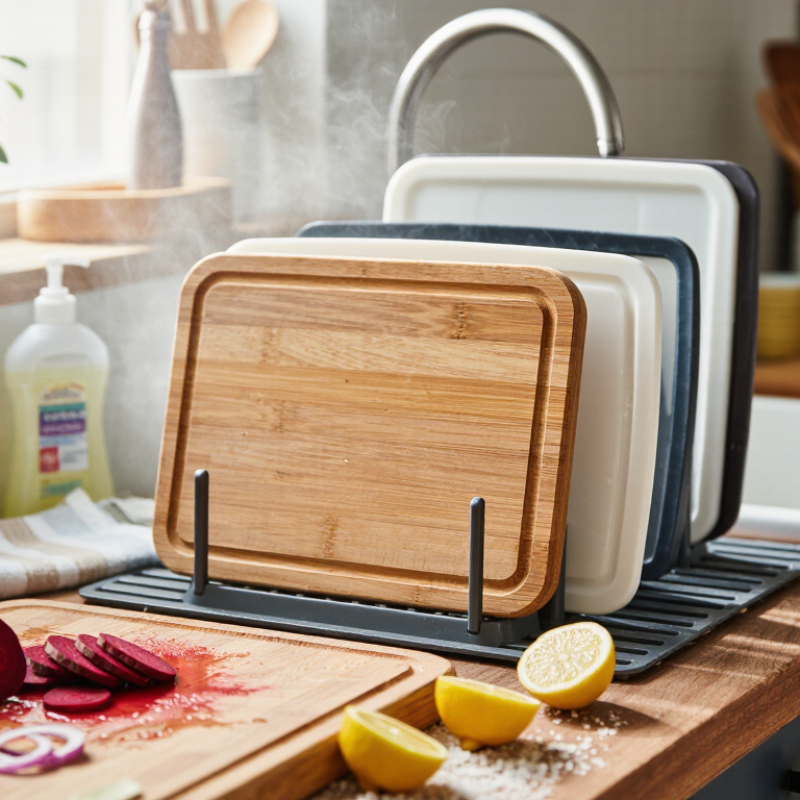
Choosing the right cutting board can prevent many stains and lingering odors. A nonporous plastic board is practical for raw meat because juices cannot soak deeply into its surface. It is also easier to wash thoroughly, especially if it is dishwasher-safe. However, deep knife grooves can trap food residue over time. I once kept using a scratched board too long, and the smell returned after every wash.
A nonporous plastic board is practical for raw meat.
A dense wooden board works well for vegetables, bread, and herbs. Its natural surface feels gentle under a knife, but it needs careful drying after use. Do not leave it beside a wet sink. Choose a thick board that does not flex easily, and avoid boards with visible cracks. Bamboo may resist moisture better than some softer woods, yet quality and surface treatment still matter. Wood is not maintenance-free.
For strong odor control, use separate boards for raw proteins and ready-to-eat foods.
A smaller board for garlic, onions, or fish can limit odor transfer. Wash each board soon after use with hot water and dish soap, then dry it upright. Avoid relying on lemon or salt alone; they may freshen the surface without removing all residue. I sometimes prefer a plastic board for messy ingredients, even though it looks less elegant. Cleanliness matters more than appearance.
A nonporous plastic board limits deep absorption from meat juices and strong food smells. It is practical, especially when dishwasher-safe. Deep grooves still trap residue.
Dense wood suits vegetables, bread, and herbs because it feels gentle under a knife. Choose a thick board that stays firm during cutting. Avoid visible cracks.
Yes. Use one board for raw meat, poultry, or seafood, and another for ready-to-eat foods. A small board can handle garlic, onions, or fish. This reduces odor transfer.
Scrape off food residue, then wash the surface with hot water and dish soap. Focus on knife grooves, corners, and stained areas. Rinse thoroughly.
Stand it upright so air reaches both sides. Do not leave it flat beside a wet sink or on a damp counter. Let it dry fully.
Use a food-safe sanitizing solution and follow its label directions carefully. Never mix cleaning chemicals. That shortcut is not worth testing.
Lemon or salt may freshen the surface, but they might not remove trapped residue. Wash the board properly first. Fresh smell is not proof of cleanliness.
Replace a plastic board when deep cuts keep holding residue after washing. Inspect scratched surfaces regularly. I once kept using one too long, and the odor returned after every wash.
Store completely dry boards vertically or on raised supports. Leave space between boards so air can circulate. Not just the edges.
Learning how to prevent stains and odors on cutting boards begins with choosing the right material and maintaining it consistently. Nonporous boards are generally easier to clean, while wooden boards need regular care to prevent moisture and food particles from settling into the surface. After every use, remove scraps, rinse the board, and wash it with warm water and mild dish soap. Prompt cleaning is especially important after preparing colorful vegetables, strong-smelling foods, or raw ingredients.
For visible stains, use gentle household methods such as a paste of baking soda and water, allowing it to sit briefly before rinsing thoroughly. Persistent odors can often be reduced by applying diluted vinegar or rubbing the surface with a cut lemon and a little salt, followed by a complete rinse. Always dry the board upright or in a well-ventilated area, disinfect it when appropriate, and avoid storing it while damp. Proper drying, occasional conditioning for suitable wooden boards, and separate boards for different food types can help keep cutting boards fresh, clean, and long-lasting.

 Eco Best Kitchens