In today’s fast-paced culinary world, efficiency is key. Enter flexible cutting mats, hailed for their versatility and ease of use. Understanding why flexible cutting mats are convenient can transform your food preparation experience. They offer a unique solution for both novice and professional cooks alike.
These mats are lightweight and easy to store. They can be rolled or folded, making them ideal for kitchens with limited space. Additionally, their vibrant colors make food prep visually appealing. You can easily identify different mats for various ingredients, reducing cross-contamination risks. While they are simple tools, their practical benefits cannot be understated.
However, it's worth considering their durability. Some users may find that lower-quality mats wear out faster than expected. Investing in a trusted brand can mitigate this issue. Ultimately, flexible cutting mats embody convenience in the kitchen, enhancing your cooking routine. Embracing these tools could lead to a more organized and enjoyable cooking experience.
Benefits of Flexible Cutting Mats in Culinary Settings
Flexible cutting mats are essential tools in culinary settings. Their lightweight and portable nature makes them easy to handle. You can quickly cut vegetables or fruits without needing a heavy cutting board. A flexible mat allows you to slide chopped ingredients directly into a pot or pan. This reduces mess and saves time during meal prep.
Another significant advantage is their easy-to-clean surface. Simply rinse them under water or wipe them with a cloth. Many flexible mats are also dishwasher-safe, enhancing convenience. However, the durability of these mats can be a concern. Over time, they might show signs of wear. It’s important to inspect them regularly for any cuts or scratches that could harbor bacteria.
Furthermore, flexibility means they can fit into various spaces. You can roll them up for easy storage, making them perfect for small kitchens. They efficiently adapt to any workspace, whether at home or in a professional kitchen. Yet, some chefs might find it challenging to stabilize the mat while cutting. This reflects the need for balance between convenience and practicality in culinary tools.
Impact of Flexible Cutting Mats on Food Safety and Hygiene
Flexible cutting mats are essential tools in any kitchen. They are lightweight and easy to store. But their impact on food safety is what stands out. These mats reduce cross-contamination risks when used properly. Unlike traditional wooden or plastic boards, flexible mats are less porous. They do not harbor bacteria as easily, making them a hygienic choice for food preparation.
Using separate mats for different food categories can enhance safety. For instance, you can use one mat for vegetables and another for meats. This practice minimizes the chances of harmful bacteria transferring between food types. Additionally, their easy-to-clean surface allows for thorough sanitation. A simple wipe down with soap and water can suffice, but many may overlook this step. Hygiene must be a priority in the kitchen.
While flexible cutting mats offer convenience, they are not without shortcomings. Some may wear down or develop cuts over time. These imperfections can become breeding grounds for bacteria if not replaced regularly. It’s crucial to inspect them frequently to maintain hygiene standards. Adopting good practices with these mats can significantly enhance food safety in your kitchen.
Comparison of Material Durability in Flexible vs. Traditional Cutting Mats
When choosing between flexible cutting mats and traditional options, material durability plays a crucial role. Research shows that flexible mats, often made from polypropylene, are lightweight yet highly durable. They can withstand frequent use without showing significant wear. In contrast, traditional mats, often crafted from rubber or wood, may wear down faster, especially under heavy chopping. The evaluation of long-term durability indicates that flexible mats can last up to 50% longer when used regularly.
One industry report suggests that flexible mats resist cuts and scratches more effectively. This quality helps maintain a clean surface for food preparation. Traditional mats may require more frequent replacement, resulting in additional cost over time. Users can save money while enjoying a reliable cutting surface with a flexible option.
Tip: To prolong the life of your cutting mats, avoid using sharp knives that can damage their surface.
Another consideration is maintenance. Flexible mats are easier to clean, often being dishwasher safe. Traditional mats may suffer from stains that become ingrained, requiring harsher cleaning methods. Regular washing can maintain the hygiene of flexible mats, making them a practical choice.
Tip: Ensure proper drying after washing to prevent any bacterial growth.
Ergonomic Advantages of Using Flexible Cutting Mats for Food Preparation
Flexible cutting mats offer several ergonomic advantages that make food preparation easier and safer. They are lightweight and easy to handle, reducing strain during cooking. Unlike traditional cutting boards, these mats can bend and flex. This feature allows users to funnel chopped ingredients directly into pots or bowls. It minimizes the mess often found in kitchens, providing a more streamlined cooking experience.
The textured surface of flexible cutting mats prevents slipping. This stability helps maintain control while chopping, slicing, or dicing. Users can apply firm pressure without the board moving around. Additionally, these mats are made from materials that resist knife marks. This durability contributes to a cleaner and safer food prep area. However, some users may notice that these mats can warp over time. It’s essential to store them flat or rolled up to maintain their shape.
Cleaning is a breeze with flexible cutting mats. They are often dishwasher safe, making sanitation simple. However, handling them can be tricky if one isn’t used to their flexibility. Sometimes, they can slip off counters if not placed securely. Despite these minor inconveniences, their benefits far outweigh the drawbacks. Flexible cutting mats represent a practical choice for any home kitchen.
Cost-Effectiveness of Flexible Cutting Mats for Home and Professional Chefs
Flexible cutting mats are a cost-effective solution for both home and professional chefs. They offer affordability without sacrificing quality, making them accessible to all cooking enthusiasts. According to industry reports, durable flexible cutting mats can last up to five times longer than traditional wooden boards, significantly reducing replacement costs over time.
In a culinary setting, hygiene is paramount, and flexible mats excel in this area. They are easy to clean and can often be sanitized in a dishwasher, preventing cross-contamination. A study showed that plastic mats reduce bacterial growth by over 50% compared to wood. This statistic highlights their practicality and effectiveness in maintaining a safe kitchen environment.
Tip: Consider color-coding your flexible mats to prevent cross-contamination. Use separate colors for meat, vegetables, and seafood. This simple practice enhances food safety.
While flexible mats are convenient, they can slip during use. A weighted base or textured surface minimizes this risk. Make sure to assess your workspace to ensure safety and efficiency.
Tip: Check for wear and tear regularly. A damaged mat may pose health risks. Always replace mats showing signs of fading or cuts to maintain optimal hygiene standards.
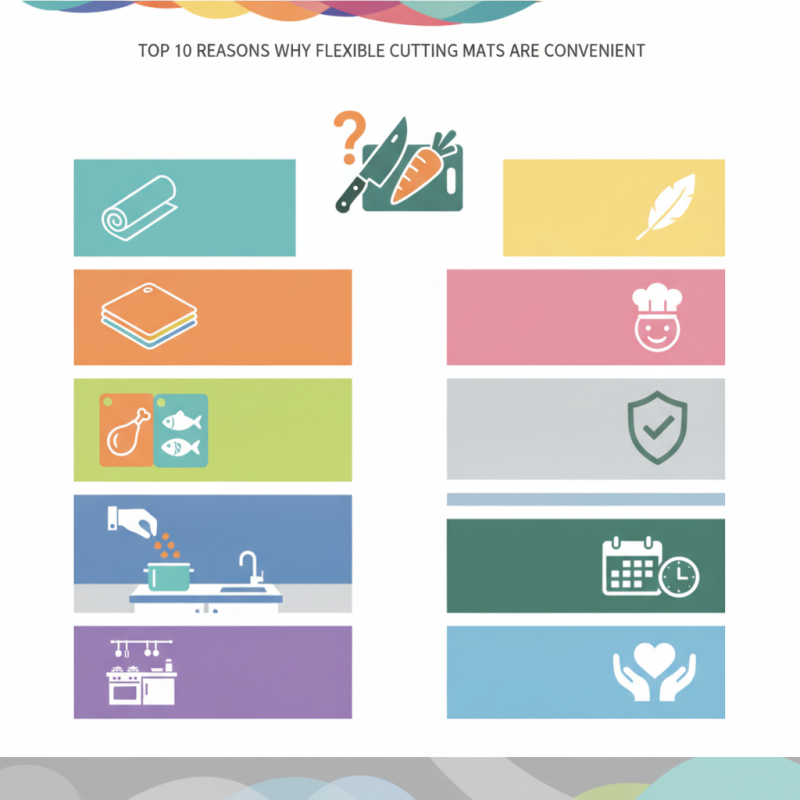
Top 10 Reasons Why Flexible Cutting Mats Are Convenient
FAQS
: Flexible cutting mats are lightweight and portable. They make meal prep easier and reduce mess.
They minimize cross-contamination due to their non-porous surface. They are a hygienic choice compared to traditional boards.
Yes, you can rinse them or wipe with a cloth. Many are also dishwasher-safe for added convenience.
They can be rolled up for easy storage, making them ideal for compact kitchen spaces.
Yes, they may wear down or show cuts over time, which can lead to hygiene concerns.
Using separate mats for different food categories can prevent harmful bacteria from transferring.
Many people forget to thoroughly clean their mats, which is crucial for maintaining hygiene.
No, some users may struggle with stability, highlighting the need for balance in kitchen tools.
Conclusion
Flexible cutting mats offer numerous advantages that make them an essential tool in both home kitchens and professional culinary environments. One of the key reasons why flexible cutting mats are convenient lies in their lightweight and adaptable nature, which allows for easy maneuverability and storage. The materials used in these mats often provide better durability compared to traditional cutting surfaces, ensuring longevity even with repeated use. Additionally, they promote food safety and hygiene by preventing cross-contamination and are easier to clean.
The ergonomic benefits of flexible cutting mats greatly enhance the food preparation experience, as they can be bent or folded to seamlessly transfer ingredients into pots or pans. Furthermore, their cost-effectiveness makes them an appealing choice for chefs of all skill levels, providing a practical solution without compromising on quality. Overall, the unique features and practical benefits of flexible cutting mats highlight why flexible cutting mats are convenient for culinary enthusiasts and professionals alike.

 Eco Best Kitchens