A kitchen knife can make meal preparation quicker, but small habits often decide whether a task stays safe. A damp handle, a wobbling cutting board, or a blade left beneath dishwater can turn an ordinary moment into a preventable injury. So, what are common mistakes when using knives? Many involve rushing, using the wrong knife, or assuming a dull blade is harmless. It isn’t. A blunt edge may require extra pressure and slip when it meets a firm carrot or squash.
The ten tips in this guide focus on practical choices: keeping the board stable, using a controlled grip, cutting away from your body, and storing knives where fingers will not meet exposed edges. They also cover cleaning, sharpening, and choosing a blade suited to the food. Small details matter. Dry the handle. Keep your eyes on the cut. Put the knife down before reaching for something else.
Good technique comes from practice, but confidence should not replace attention. Even experienced home cooks can get distracted, and a checklist cannot remove every risk. I still find that slowing down for one careful cut is better than trying to save a few seconds. Use the guidance as a starting point, follow the knife maker’s care instructions, and adjust your routine when a tool or task feels unfamiliar.
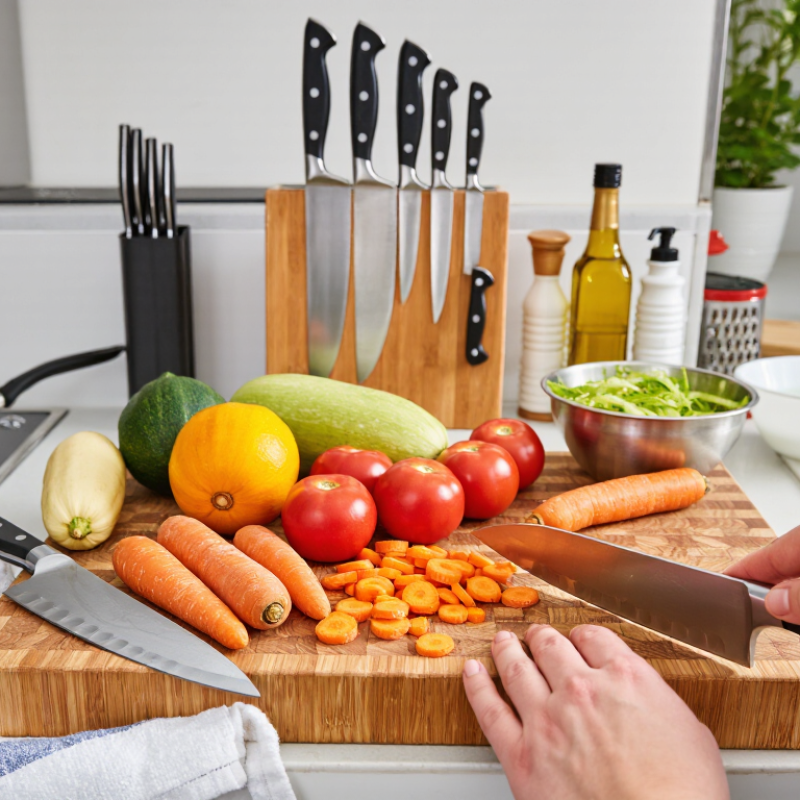
Choosing a knife that fits your hand matters more than owning a large set. Hold it before buying, if possible: the handle should feel secure, and the blade should balance comfortably without straining your wrist.
A chef’s knife works for many vegetables, while a small paring knife gives better control over fruit and detail work. Use the right size for the task. A long blade can feel awkward when trimming a small apple.
A sharp, well-maintained edge usually needs less force than a dull one, which can slip when you push too hard. Keep it simple. Before cutting, place a damp towel beneath the board so it cannot skate across the counter. Make sure the board is large enough for the food, and clear away jars, cords, and scraps that crowd your working area.
Dry your hands and the knife handle; a wet grip is unreliable. Good lighting helps you see where your fingers are, especially when slicing small pieces. Curl the fingertips of your guiding hand inward, keeping knuckles toward the blade as a guide.
I used to think a tidy workspace was optional, but a stray onion peel can make a board surprisingly slippery. Check the setup again when you switch ingredients or tools.
A steady grip starts with a dry handle and a relaxed hand. Wrap your fingers around the handle, then rest your thumb and index finger near the blade’s base if the knife design allows it. This pinch grip can improve control, though it may feel awkward at first. Keep your wrist straight and let the blade do the work. A tight, tense grip often makes small cuts less precise.
Secure the cutting board before you begin. Place a damp towel underneath it; even a small slip can turn a routine slice into a close call. Hold the ingredient with your fingertips curled inward, keeping your knuckles in front as a guide for the blade. Move those fingertips back as the ingredient gets smaller. Slow down near the end. I sometimes catch myself rushing through the last few slices, and that is exactly when my grip needs more attention. If a tomato rolls or an onion shifts, pause and reposition it instead of chasing it with the knife. A stable setup matters more than speed.
Holding the Knife and Securing Ingredients Correctly
Each bar counts the practical action cues listed for that knife-use practice. These checklist counts are not injury statistics or measured risk scores.
Controlled knife work starts before the blade touches food. Place a damp towel beneath the cutting board to stop it from sliding. A wobbly board invites mistakes. Keep the food flat-side down when possible, and curl your fingertips under on the guiding hand. Let your knuckles guide the blade while fingertips stay tucked away. This grip can feel awkward at first, especially when chopping a small onion. Pause and reposition it rather than holding it in your palm.
Use smooth, deliberate strokes instead of forcing the blade through ingredients. A sharp, well-maintained knife usually needs less pressure, but it still requires steady control. Keep the tip or edge in contact with the board when the cut allows it, and move at a pace that lets you watch your fingers. If the food shifts, stop and steady it before continuing. Never reach across a blade or try to catch a falling knife. Let it fall. I still catch myself speeding up when dinner is late; that is usually my cue to put the knife down, breathe, and reset my grip.
Wash a knife soon after use, especially after cutting acidic foods such as tomatoes or citrus. Use warm water, mild dish soap, and a sponge, keeping the blade pointed away from your hand. Never leave it hidden in a sink of soapy water. Dry it fully with a towel before storage; moisture can stain some blades and damage wooden handles. A dishwasher is rough on knives because heat and movement can dull edges or loosen handles.
Tips: Keep the cutting board stable with a damp towel underneath. Hone regularly if your knife’s care instructions allow it; honing realigns an edge, while sharpening removes metal to create a new one. Use a stable surface and follow the sharpener’s directions. Don’t test an edge on your finger. If sharpening feels uncertain, seek help from a qualified knife-care professional.
Store knives in a block, blade guard, or secure drawer divider so edges do not knock against other utensils. A magnetic strip can work when firmly mounted and placed beyond children’s reach. Check that the knife is seated safely before letting go. Routines can slip when dinner is rushed; pause before putting a knife away. Small habits matter.
Building reliable knife habits starts before the blade moves. Set a damp towel beneath the cutting board so it cannot skate across the counter. Keep fingertips curled, with your knuckles guiding the blade. Cut slowly through firm foods; forcing a knife through a tomato or squash invites slips. A sharp, well-maintained blade usually needs less pressure, but it still deserves your full attention. No multitasking.
Clean handling matters, too. The CDC estimates that 48 million people in the United States get sick from foodborne illnesses each year, based on its 2011 estimates. That figure is not specific to knives, but it shows why small kitchen routines matter. USDA food-safety guidance recommends washing hands for 20 seconds and cleaning utensils after they touch raw food. Wash the knife and board before switching ingredients, especially from raw meat to ready-to-eat vegetables.
Make these steps repeatable: place the board, choose a stable grip, cut at a controlled pace, then wash and dry the knife safely. Store it where the edge cannot be reached by accident. Pause. Reset. I still find that cleanup is the step most easily rushed when dinner is nearly ready. That is exactly when a simple checklist helps: clear the workspace, keep the handle dry, and put the knife away only after cleaning it.
Keep the handle dry and your grip relaxed. Rest your thumb and index finger near the blade’s base if the design allows. It may feel awkward at first.
Put a damp towel beneath the board before cutting. Check that it stays steady on the counter. A small shift matters.
Curl your fingertips inward and guide the blade with your knuckles. Move your fingers back as the ingredient gets smaller. Slow down near the last slices.
Stop and reposition it. Do not chase a rolling tomato with the knife. I sometimes forget this when dinner feels rushed.
Wash it soon with warm water, mild dish soap, and a sponge. Keep the blade pointed away from your hand. Dry it fully with a towel.
No. A submerged blade can be hard to see. Wash it promptly instead.
Honing realigns an edge. Sharpening removes metal to create a new edge. Follow the knife’s care instructions, and do not test sharpness on your finger.
Use a block, blade guard, or secure drawer divider. A firmly mounted magnetic strip can work beyond children’s reach. Check that the knife is seated before letting go.
Wash the knife and cutting board after they touch raw food, especially before cutting ready-to-eat vegetables. Wash your hands for 20 seconds. Don’t rush this step.
Avoiding common knife mistakes starts with choosing a knife suited to the task and preparing a clean, stable workspace. Keep the cutting board from sliding, make sure ingredients are steady, and hold the knife with a firm, comfortable grip. Curl the fingers of your guiding hand away from the blade to help protect them, and keep your attention on the cutting task rather than rushing.
Use controlled, deliberate strokes and let the sharp blade do the work; forcing a dull knife can make it harder to control. After use, clean and dry knives carefully, sharpen them as needed, and store them securely so the blade is protected and cannot cause accidental injury. Building these habits consistently helps answer the question, “what are common mistakes when using knives,” and makes everyday food preparation safer and more confident.

Eco Best Kitchens