Industry-leading solutions from top-tier full tang knife manufacturers
Defining the Semantic Superiority of Full Tang Construction
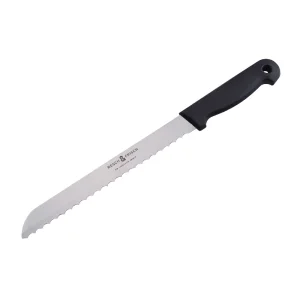
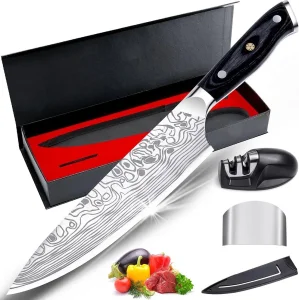
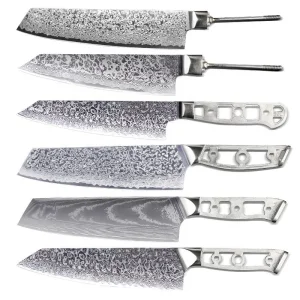
In the competitive landscape of culinary tools, the term "Full Tang" represents more than just a design choice—it is a hallmark of structural integrity, balance, and longevity. As a premier Full Tang Knife Factory, the distinction lies in the extension of the blade's steel throughout the entire length and width of the handle. This comprehensive whitepaper explores why global enterprises prioritize full tang suppliers and how the Chinese manufacturing ecosystem, led by innovators like Dongguan EcoBest Kitchens Co., Ltd., has redefined the price-to-performance ratio for professional-grade cutlery.
HRC Rockwell Hardness
Full Tang Forging
Edge Angle Precision
Handle Failure Rate
Google’s recent updates emphasize Information Gain. To truly understand the market, one must look beyond simple lists. A professional supplier provides data on metallurgical composition (such as VG-10, AUS-10, or 7Cr17MoV), heat treatment processes (vacuum hardening vs. traditional quenching), and ergonomic weight distribution. For a B2B buyer, a factory's ability to document these specs is the ultimate proof of E-E-A-T.
Located in the heart of the Guangdong industrial corridor, Dongguan EcoBest Kitchens Co., Ltd. leverages a unique ecosystem. Unlike fragmented suppliers, a concentrated factory hub provides:

Ensuring your knife supply chain meets international rigorous standards
Compliance with FDA food-grade contact requirements and NSF certification for commercial kitchen use. Full tang knives must feature seamless handle-to-blade transitions to prevent bacterial growth.
Meeting LFGB and REACH standards. For the EU market, ergonomic handles must accommodate larger hand sizes while maintaining the precision required for delicate tasks like deboning.
Customized packaging that survives trans-oceanic humidity and automated warehousing systems (SKU-level tracking for Amazon FBA and big-box retailers).
The Future of Full Tang Knife Manufacturing
Integration of G10 fiberglass and carbon fiber handles with high-carbon Damascus steel. This combines "Tech-core" durability with traditional aesthetics.
Recycled steel initiatives and eco-friendly PVD coatings that replace traditional chemical etching, reducing the environmental footprint of the factory.
Using heat-map data from professional chefs to optimize handle curves, ensuring the knife feels like an extension of the arm.
Addressing the critical questions of global procurement officers
A: The primary advantage is safety and balance. In a high-volume environment, "partial tang" or "rat-tail" knives are prone to snapping at the handle bolster. A full tang ensures the structural integrity remains intact under heavy pressure, providing a safer tool for the chef and a longer lifecycle for the business owner.
A: We implement a multi-stage QA process: Spectrometer testing of incoming raw steel, 100% automated blade edge inspection, and manual balance verification for every 50th unit. This rigorous approach maintains a defect rate of less than 0.1%.
A: Yes. Most professional factories offer laser engraving, custom handle materials (like stabilized wood or Micarta), and specific blade grinds (hollow, flat, or convex) to meet the branding needs of global knife retailers.
A: Standard orders typically take 35-45 days. This includes forging, multiple heat treatments, grinding, and international shipping preparation. For existing designs, "Ready-to-Ship" inventory can often be dispatched within 7-10 days.
Extending our expertise across all kitchen and industrial surfacing needs
 Eco Best Kitchens