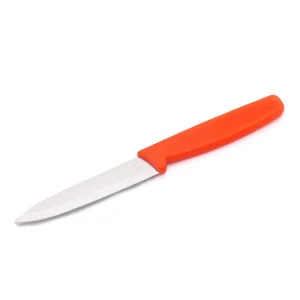
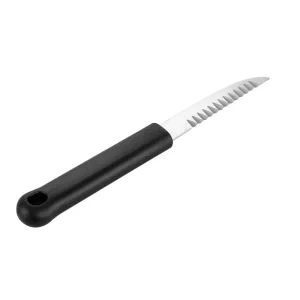
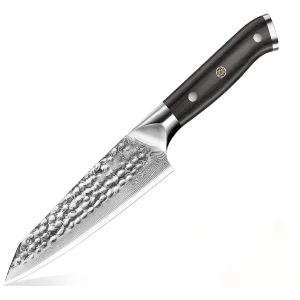
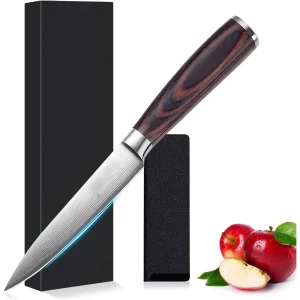
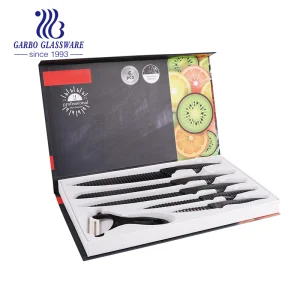
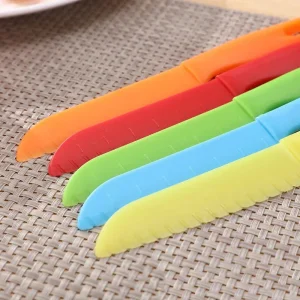
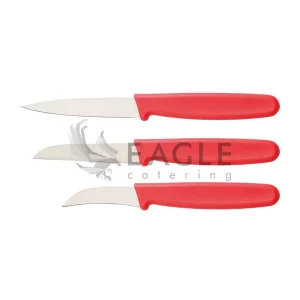
Italy holds a prestigious position in the global cutlery market, particularly in the niche of paring knives. The Italian paring knife manufacturing sector is characterized by a unique blend of centuries-old tradition and cutting-edge AI-integrated manufacturing technologies. Centered primarily in the region of Maniago, known as the "City of Knives," Italian factories have transitioned from manual blacksmithing to automated precision engineering without losing the "Made in Italy" soul.
For B2B buyers and wholesalers, Italy represents a benchmark for quality. Factories here specialize in high-carbon stainless steel alloys that offer the perfect balance between edge retention and corrosion resistance. The local industrial status is currently seeing a resurgence as global demand for premium, ergonomic kitchen tools grows. Italian manufacturers are not just producers; they are designers who understand that a paring knife—the smallest yet most versatile tool in a chef's kit—requires surgical precision.
Modern Italian factories are increasingly adopting Industry 4.0 standards. This includes the use of robotic arms for consistent blade grinding and laser-cutting technology that ensures every paring knife meets exacting tolerances. As a leading Paring Knives Manufacturer, the focus has shifted toward "Sustainable Sharpness"—using recycled steel alloys and eco-friendly handle materials like FSC-certified woods or bio-plastics, mirroring the values of global leaders like Dongguan EcoBest Kitchens Co., Ltd.
In Italy, a paring knife is more than a tool; it is an extension of the hand. The diversity of Italian cuisine dictates the specialized designs produced in local factories:
Every great Italian sauce starts with a soffritto (onion, celery, carrots). Italian paring knives are designed with ultra-thin spines to allow for the fine dicing required for these aromatics to melt into the olive oil.
Italy's unique produce, like the thorny Carciofo or delicate truffles, requires knives with specific tip strengths. Local manufacturers produce 'Bird’s Beak' paring knives specifically for the curved peeling of these regional delicacies.
Along the Amalfi coast, paring knives are used for cleaning small Mediterranean fish. The localized trend favors ergonomic, non-slip handles that withstand humid, salty environments.
The Italian knife industry is currently dominated by three major trends:
1. Hybrid Blades: Combining Japanese VG10 steel cores with Italian ergonomic handle designs.
2. Minimalist Aesthetics: A move towards monolithic designs where the blade and handle flow seamlessly, catering to the modern high-end kitchen aesthetic.
3. Custom OEM Solutions: Factories are offering more flexibility for international brands to customize blade shapes and handle colors, much like the versatile range offered by professional suppliers.
Dongguan EcoBest Kitchens Co., Ltd. is a professional manufacturer and supplier specializing in high-quality kitchenware and cooking solutions. Located in Dongguan, Guangdong Province, one of China’s major industrial and manufacturing hubs, the company operates modern production facilities equipped with advanced assembly lines, research and development centers, and strict quality control systems. EcoBest Kitchens focuses on producing innovative, durable, and eco-friendly kitchen appliances and tools designed for homes, restaurants, and commercial catering applications.

The company’s main business includes the production and distribution of cutting boards, knives and accessories, kitchen storage solutions, multifunctional cooking tools, and other home and professional kitchen equipment. Each product is crafted from high-quality materials, ensuring sturdiness, safety, and long-term durability. With a focus on practical design and eco-friendly materials, EcoBest Kitchens offers solutions that improve cooking efficiency, maintain hygiene, and provide convenience for everyday meal preparation.

Dongguan EcoBest Kitchens Co., Ltd. employs a skilled team of engineers, product designers, quality inspectors, and customer service professionals. The company provides comprehensive support from product design and manufacturing to after-sales service, ensuring customer satisfaction at every stage. Guided by principles of innovation, quality, and sustainability, EcoBest Kitchens continues to expand its presence in domestic and international markets, offering trusted, high-performance kitchen solutions for partners and customers worldwide.
Whether sourcing from Maniago, Italy, or the industrial heart of Dongguan, professional buyers look for consistency. The integration of AI-driven quality control ensures that every paring knife leaving the factory has a perfect grind angle, usually between 12-15 degrees per side for European styles. This precision is vital for high-volume commercial use where a knife must perform thousands of cuts before requiring sharpening.
What sets an Italian-made paring knife apart from mass-produced alternatives is the thermal treatment. Factories in Northern Italy often use vacuum heat treatment to achieve a Rockwell hardness that stays sharp longer without becoming brittle. The most common steel used is the X50CrMoV15, a high-performance alloy containing chromium for rust resistance, molybdenum for strength, and vanadium for wear resistance.
Furthermore, the handle-to-blade balance is a point of obsession. In professional Italian kitchens, where a chef might spend hours peeling "Pomodori" (tomatoes) or "Pesche" (peaches), a paring knife must have a neutral balance point. Manufacturers achieve this through tapered tang designs and lightweight, high-density polymers that are injection-molded directly onto the blade for a hygienic, seamless bond.
Looking ahead to 2030, the Italian paring knife factory of the future is digital. AI algorithms are now being used to predict the wear on grinding wheels, ensuring that the first knife of the day is just as sharp as the 10,000th. This technological leap allows Italian manufacturers to remain competitive with global markets while maintaining their signature artisanal finish. For partners like EcoBest Kitchens, this synergy of technology and craftsmanship is the roadmap for future product development.
 Eco Best Kitchens