Engineered to withstand the demanding, high-humidity environments of Caribbean commercial kitchens, resorts, and food processing facilities.
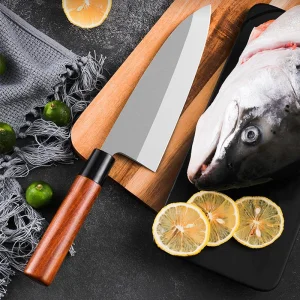
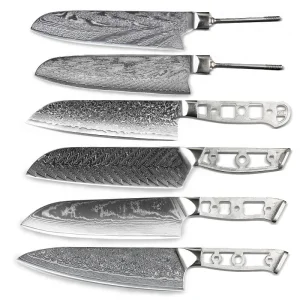
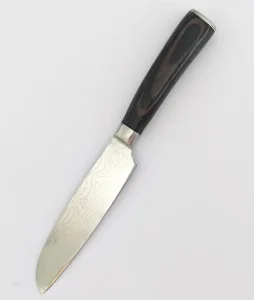
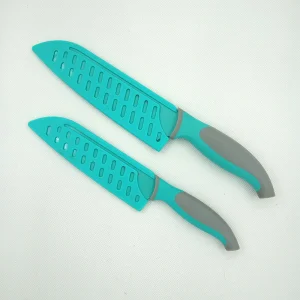
The Commonwealth of Dominica, known globally as the "Nature Island" of the Caribbean, is undergoing a profound structural economic transformation. Driven by sustainable eco-tourism, high-value agricultural exports, and a burgeoning food processing sector, the island's demand for high-performance, professional-grade culinary equipment has reached unprecedented levels. While Dominica has not historically been a primary location for heavy metallurgical smelting, its position as a strategic hub for Caribbean hospitality supply chains is rapidly advancing.
Local hospitality groups in Roseau, Portsmouth, and the surrounding eco-tourism corridors require tools that align with global culinary standards. The humid, saline tropical climate of Dominica imposes severe stresses on commercial cutlery. Standard kitchen knives are prone to rapid oxidation, pitting, and accelerated edge degradation. Consequently, there is an urgent industrial demand for specialized Santoku Knives engineered with advanced martensitic stainless steel and composite handles that resist thermal expansion and microbial colonization.
Moreover, regional distribution networks across the Organization of Eastern Caribbean States (OECS) are increasingly looking to Dominica as a central logistics facilitator. By understanding localized culinary workflows—ranging from processing fresh maritime catches to preparing complex root vegetables native to Dominican agriculture—manufacturers can design Santoku knives with specific blade geometries, bevel angles, and weight distributions optimized for regional professionals.
By integrating manufacturing expertise with localized distribution channels, our factory-to-business model mitigates key risks faced by Caribbean enterprise clients:
Analyzing the intersection of international metallurgical standards and regional logistics optimization for professional kitchenware.
To maintain professional-grade authority, our factory adheres to rigorous material disclosures. The performance of a Santoku knife is fundamentally determined by its carbon composition, tempering profile, and geometry. Below is the technical performance comparison of the primary blade materials we supply to commercial operations in Roseau and global distribution networks.
| Steel / Material Type | Hardness (HRC) | Corrosion Resistance | Edge Retention | Ideal Culinary Application |
|---|---|---|---|---|
| 67-Layer VG10 Damascus | 60 - 62 HRC | High | Exceptional | Precision slicing, high-end presentation kitchens, executive chef usage. |
| German 1.4116 Stainless | 56 - 58 HRC | Very High | Moderate / High | Heavy-duty commercial prep work, high-volume catering, robust kitchen tasks. |
| High-Carbon Sushi Steel (Hybrid) | 59 - 61 HRC | Moderate (Requires Care) | Very High | Raw fish preparation, sashimi, precision protein dicing. |
| Forged Carbon Composite | 58 - 60 HRC | High | High | General purpose restaurant prep, tough vegetable dicing. |
Importing commercial kitchenware into Dominica requires compliance with both local regulations and broader CARICOM trade standards. Our manufacturing facilities provide complete compliance packages to ensure seamless custom clearance:
Whether you operate a boutique eco-lodge in the heights of the rainforest or coordinate a regional restaurant distribution franchise across the Lesser Antilles, customized cutlery elevates your brand credibility. Our manufacturing lines are configured to support comprehensive private-label programs.
From custom laser-etched brand insignias on the blade cheek to personalized ergonomic handle geometries—using materials like high-density G10 fiberglass, pakkawood, or microbial-resistant POM—we execute exact design briefs. Our rapid prototyping capabilities ensure that sample designs are developed and shipped for evaluation within strict project timelines.
By shifting from generic retail procurement to factory-integrated supply lines, Dominican enterprises can establish superior quality control, reduce raw material costs, and build custom brand equity that resonates with discerning international tourists.
Explore our complete catalog of industrial Santoku and chef knives. Select a product model to receive specialized bulk pricing and material data sheets.
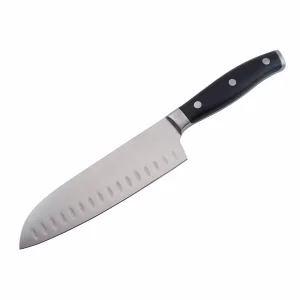
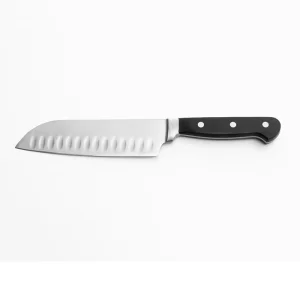
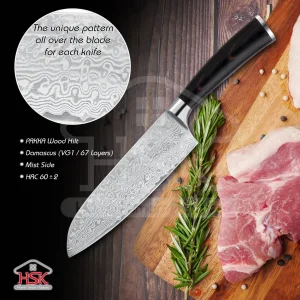
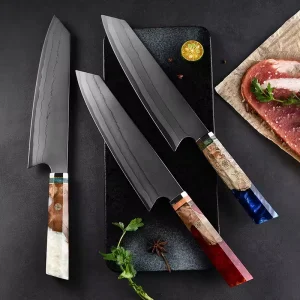
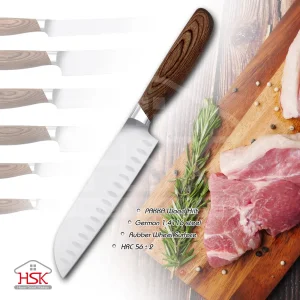
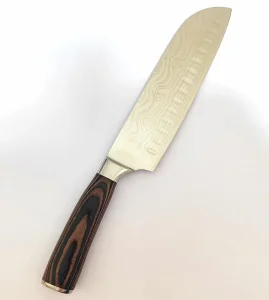
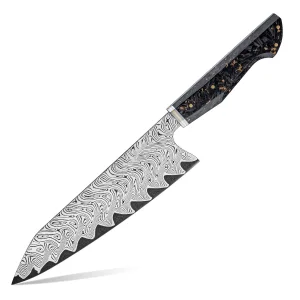
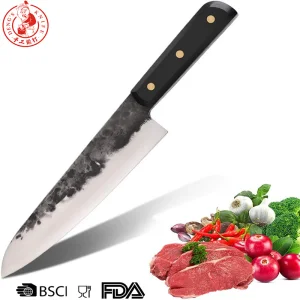
As the food preparation industry faces rising labor costs and higher demands for sanitary hygiene compliance, cutting tool technology must keep pace. Our R&D division has implemented several critical manufacturing advancements designed to improve the performance metrics of our Santoku blades.
First is the integration of automated laser-guided edge honing. By utilizing high-precision computer numerical control (CNC) grinders, each blade's edge is measured and hand-finished within a tolerance of ±0.1 degrees. This ensures that when the knife leaves the factory line, it displays a razor-sharp profile ready for high-demand commercial kitchens.
Second, our research into powder metallurgy has led to development cycles utilizing high-nitrogen stainless steels. Nitrogen, when substituted for carbon in the steel matrix, dramatically boosts corrosion resistance without sacrificing the Rockwell hardness level. This innovation is especially vital for kitchens in Caribbean states like Dominica, where exposure to citrus fruits, high humidity, and marine environments accelerates the degradation of standard alloys.
Sustainability is a key priority for Dominican eco-resorts and conscious consumers globally. In alignment with these values, our manufacturing plants operate with clean-energy mandates:
Expert insights on metallurgy, manufacturing, custom OEM options, and Caribbean freight distribution logistics.
Reduce operating costs, guarantee metal quality, and build a localized brand reputation with our custom OEM/ODM solutions. Get in touch with our engineering team for a detailed quotation.
 Eco Best Kitchens